01 Look
Front
A sash gathers the grey-brown canvas jacket, while long sheepskin hat flaps frame the face. A pannier-style bag carries a bundle of tea.
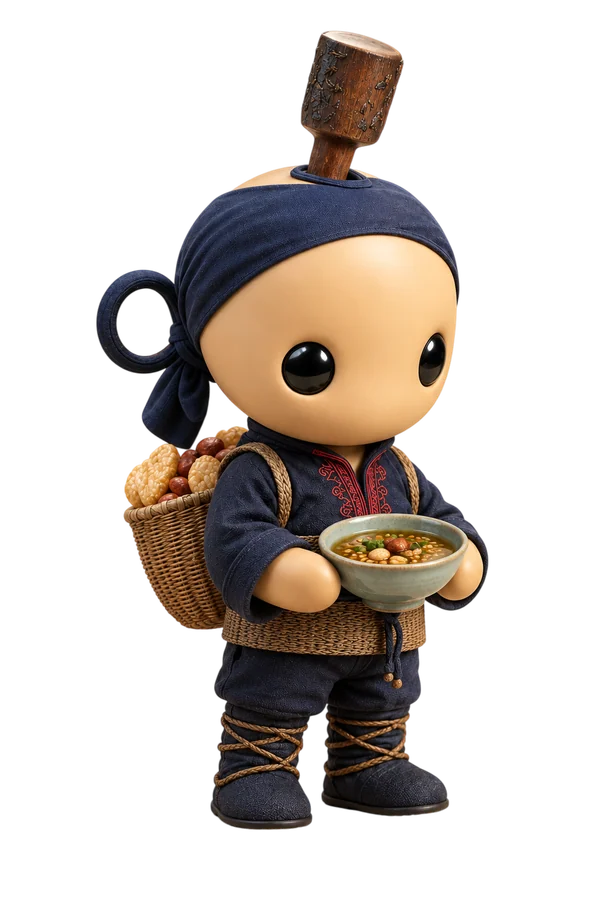
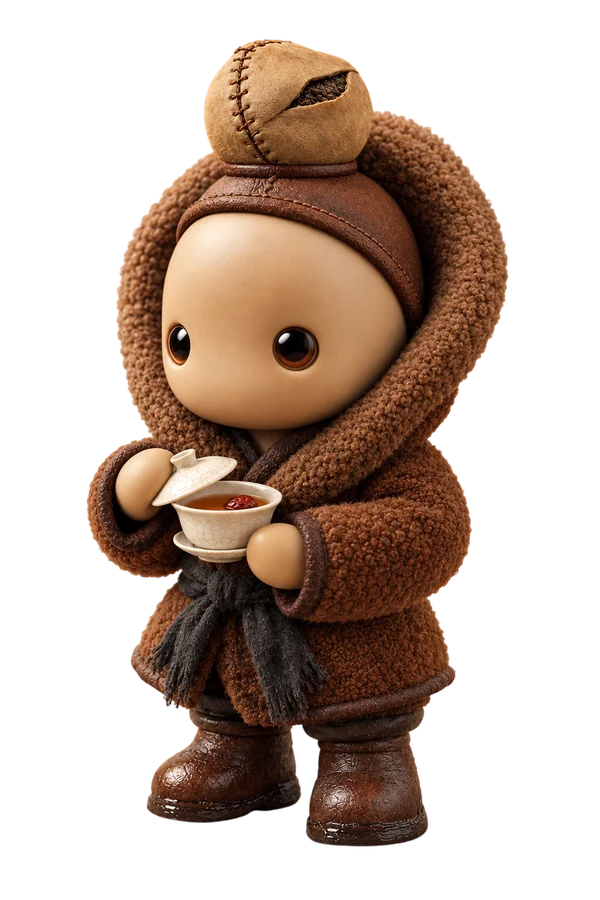
Homemade sanpaotai: tea in a gaiwan with sugar and dried fruit.
Cultural storiesGansu, Linxia Hui Autonomous Prefecture: Dongxiang Autonomous County
Recognises familiar stops by the sounds of footsteps, fastenings and tea lids.
The story / Bubenchik
After a noisy day, he chooses a quiet cup and a conversation with one friend.
Cultural context
Bubenchik / Collection
A sash gathers the grey-brown canvas jacket, while long sheepskin hat flaps frame the face. A pannier-style bag carries a bundle of tea.
A pale-grey open-front cotton jacket and a soft two-flap hat replace the travelling layers. The paws hold sanpaotai for a quiet tea break at home.
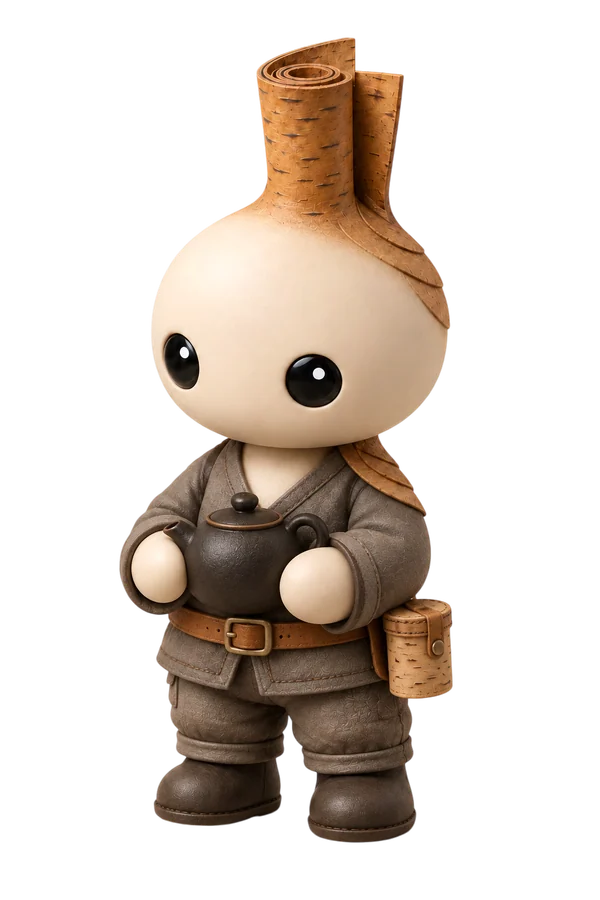
Bubenchik welcomes guests with a copper teapot. One paw holds the handle while the other supports its lower edge against his chest; a small packet of dry tea sits in a belt pocket. A long plum-and-charcoal robe and copper-russet sash create a new festive silhouette, while his uncovered natural bell keeps him recognisable.
This original Dongxiang groom look combines a long black robe with a broad grey-blue sash. A small embroidered pouch and sanpaotai tea add personal details.
A slate-blue robe with deep folds and pale turnbacks is gathered by a broad dark belt. A double belt case holds two closed tea caddies.
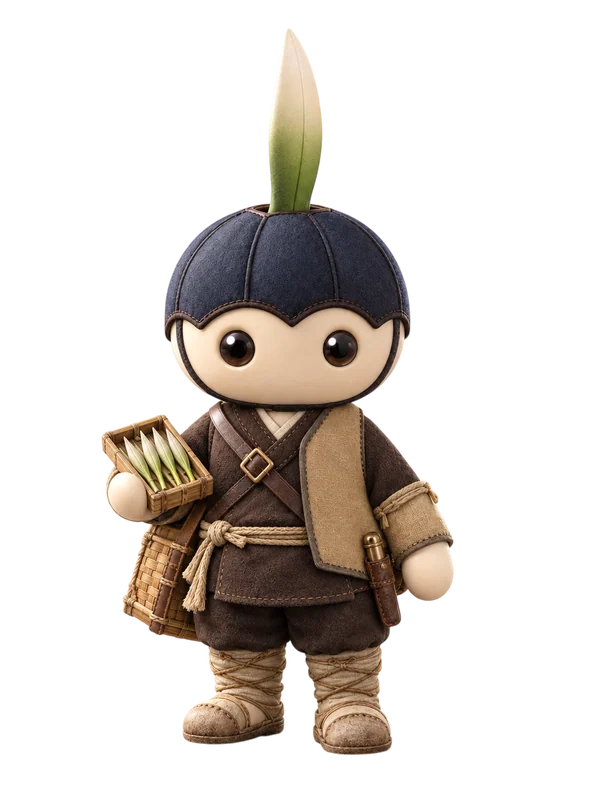
A pale shirt with full sleeves and a short aubergine waistcoat are paired with wide grey trousers. The long tea gift is tied in cloth, with dates and longan attached to the wrapping.
00 / Original form
A small brass bell and its clapper grow from a softly squared beige head. The face is broad and mouthless.
More from our world