01 Look
Front
A grey-blue shirt and rolled trousers are paired with a coiled net and a wooden float. A cup of tea accompanies this coastal working look.
Tea from a maritime shipment and a simple cup at home.
Cultural storiesGuangxi, Dongxing: the islands of Wanwei, Wutou and Shanxin on the Beibu Gulf coast
Collects well-designed tea packaging and invents second uses for it.
The story / Tsibik
He is curious about how the same portion travels from the harbour to a shelf at home.
Cultural context
Tsibik / Collection
A grey-blue shirt and rolled trousers are paired with a coiled net and a wooden float. A cup of tea accompanies this coastal working look.
A grey-green home top with a waist tie and dark cropped trousers create a relaxed silhouette. Round paws hold a cup of tea; the wooden tea box and woven hat remain distinctive details.
A pale-blue top with waist ties and wide dark trousers dress a festive outing. Beneath the broad woven hat, Tsibik holds a pale cup of tea.
A long pale-green shirt is gathered by three woven belts above wide black trousers. Coloured wooden clogs refer to the paired duiji wedding gift in this original Dongxing groom look.
A patterned blue-grey jacket and black trousers are paired with a woven hat. The raised paw holds the strap of a basket of dark tea, while a wooden tea box completes the load.
Five narrow belts gather the long cinnamon-coloured shirt with hanging side panels. Wide trousers, wooden clogs and a round woven tea gift complete the look.
00 / Original form
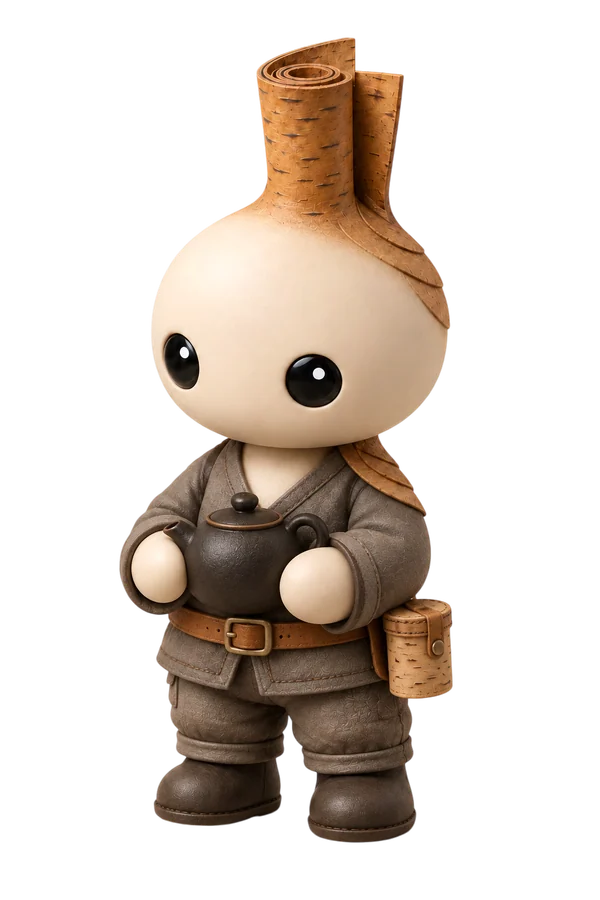
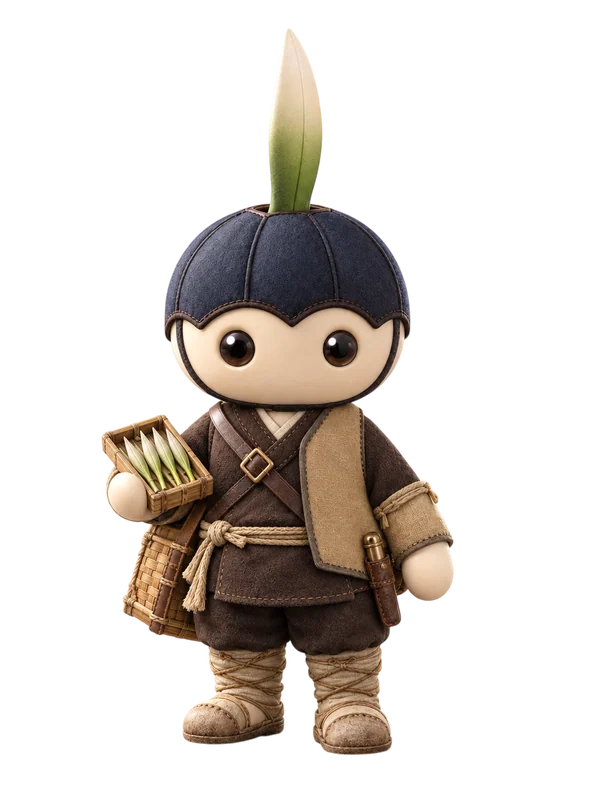
An angular tea parcel with a narrow opening in the leaves grows from the head. Large black eyes animate the warm, mouthless face.
More from our world