01 Look
Front
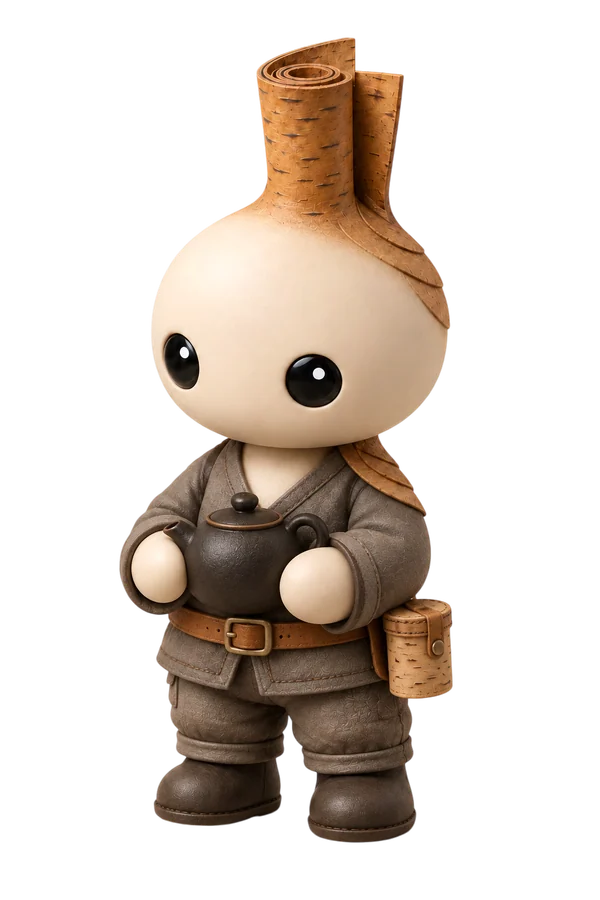
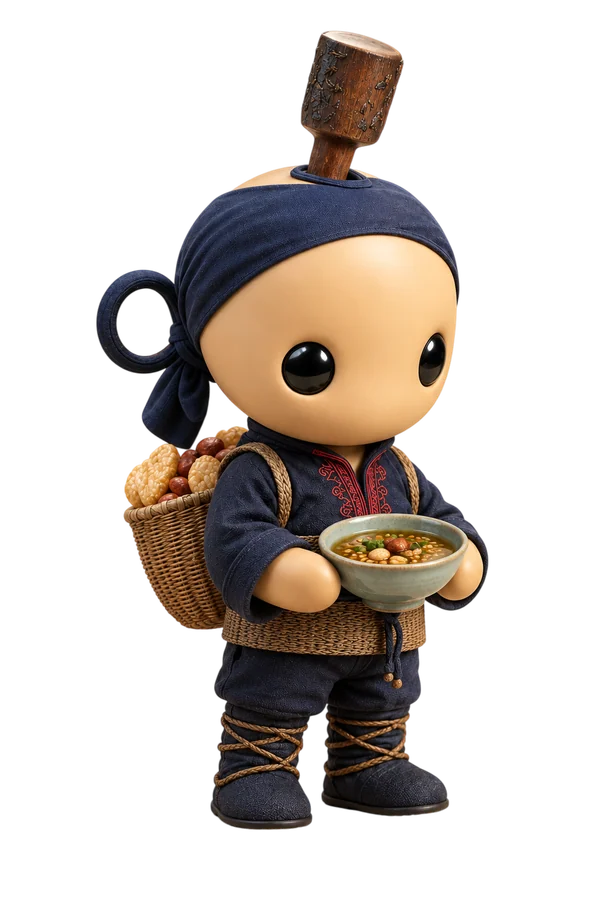
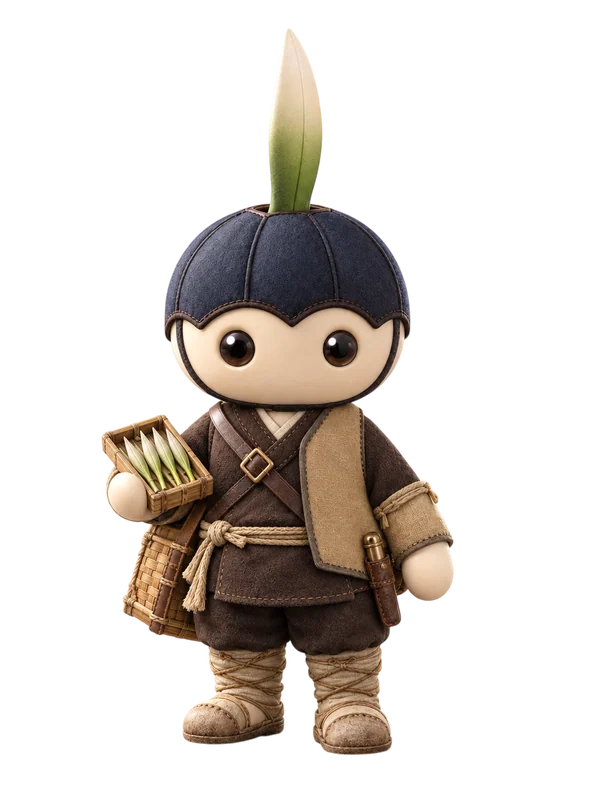
A worn dark-indigo work jacket is paired with a brown apron with a large pocket. Both clay paws hold a small teapot close to the body.
Tea brewed in a clay teapot he made himself.
Cultural storiesGuangxi, Luocheng Mulao Autonomous County
Checks whether a vessel is comfortable to grasp and its lid sits evenly.
The story / Gorshok
A small repair to a favourite tea object pleases him more than a showy new purchase.
Cultural context
Gorshok / Collection
A worn dark-indigo work jacket is paired with a brown apron with a large pocket. Both clay paws hold a small teapot close to the body.
A light-blue lightly quilted robe is edged in dark blue and tied with a soft belt. A side pocket, pale house trousers and slippers create a quiet home look.
A rich-blue short jacket is paired with wide dark trousers and cloth shoes. A brewing cup in the paws carries the tea theme through this festive Luocheng look.
Before a family wedding gathering, Gorshok brings a teapot he made for everyone to share tea. He has wrapped the warm clay in festive fabric and supports it against his chest with both paws. It is a personal gift from this potter character, not a claim about a required ritual for all Mulao people.
A short broad blue top, loose trousers and a full head wrap are paired with a fringed belt. A clay tea caddy hangs in a net holder, while one paw raises a tea scoop.
In this original wedding-visit outfit, a long dark-blue layer sits over a lighter top and a broad belt. One paw carries a basket with a clay tea caddy, while the other greets the company.
00 / Original form
A short open clay neck rises from the grey head, with tea visible inside. Brown eyes bring a gentle expression to the pottery-like form.
More from our world