tea.toys ENRU中文DEESFRJA

line two — 56 ethnic groups of China · a custom, not a rank

Maonan

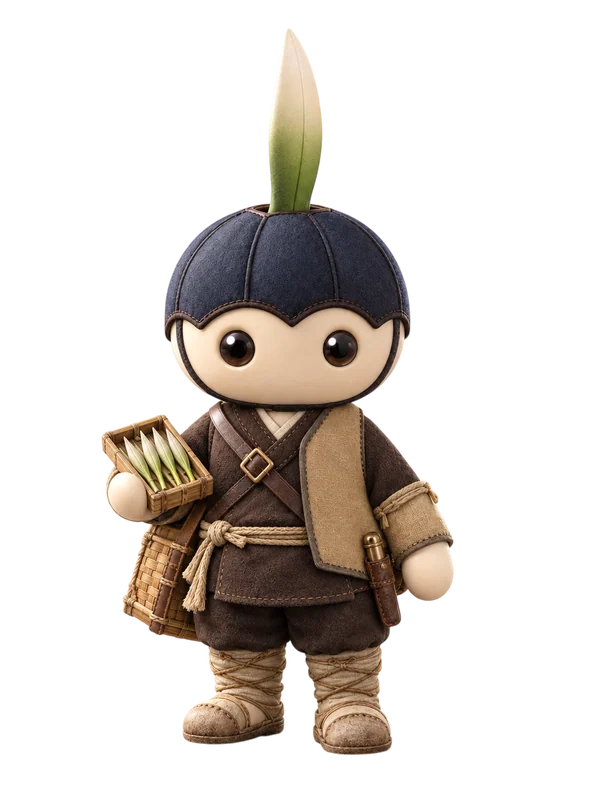
This is Gostinka. She keeps the market day, when bought tea leaf gathers in a land with no gardens of its own, while she herself weaves containers and a fan from five dyed splints.

full GLB · Hunyuan · full GLB · Hi3D

downloads open after a one-email sign-in — that is how the registry knows its guests

drag to rotate — a light 2 MB copy; full models below

Peoplemaonan ·
RegionGuangxi, Huanjiang Maonan Autonomous County
Rolehistorical narrative

Tea

The maonan have no tea gardens of their own: in Huanjiang Maonan Autonomous County, the records list 菜牛 càiniú, silkworms, and 茶油 cháyóu — oil from Camellia oleifera, which is not tea — while tea leaf arrives purchased from the 圩 xū, market day, when people gather here from the mountains. Only one documented household line exists, and it appears in the maonan way-of-life description by the National Ethnic Affairs Commission: 暑天常以浓茶解暑 — in hot weather, they drink strong brew to beat the heat. Their contribution to the tea trade is not the leaf but the container and the weaving: 毛南族花竹帽编织技艺 máonánzú huāzhúmào biānzhī jìyì — third national intangible heritage list (2011); after the summer solstice, they take 筋竹 and 墨竹, split them to hair-fine thickness, and dye them with black indigo and yellow gardenia juice. The township of Xinan is where the weaving happens.

Sprout on the crown

A fan of five hair-fine bamboo splints rising from the crown and slightly spreading apart: two black from indigo, three yellow from gardenia; between the splints is wedged one dry leaf of purchased tea. From the fan of the Hani (Aini branch), this one differs in count and gap: there three wide solid leaf strips close into a dense fan, here five hair-fine splints show the background between them at 6 mm — a comb, not a blade.

Headwear

头巾 tóujīn — a black men’s cloth about eight chi, wound by rule from left to right, an everyday item with no marks at all. Both ends are joined into one and tucked FLAT under the last turn at the occipital seam — outside, neither loop nor plate, the wrap lies smooth and closed around the skull. There are no paired upright ends — no “goat horns”: such an element would read as ritual-circle 傩 attire. 花竹帽 (顶卡花) is not used: it is given as a betrothal token. The slot for the splint fan is a gap in the crown of the wrap, overcast with the same fabric; the last turn hugs the base of the fan in a ring and does not lie over it.

Outline at 6 mm. Smooth wrap with a comb: a low, tight wrap over the skull with no upright or hanging elements — empty behind the nape: a mass behind the head with a sheepskin shell is the mark of the Bao’an figure. Above the crown — a fan of five hair-fine splints: at 6 mm, the silhouette is a round head and a sparse comb on top, background visible between the teeth. It differs from the Yao in that there a closed loop stands behind the nape; from the Dong in that no fin stands at the side; from the De’ang in lacking a crown of pompoms; from the Hani (Aini branch) in that there the dome is wider than the skull with three solid fan strips, while here the splints are hair-fine and the background shows through.

Clothing

A dark jacket with a narrow trim, a wide sash, and on the sash a coil of dyed splints and the blank crown of a future hat.

Palette

Black indigo, yellow gardenia, straw bamboo, dark green of dry leaf (only on the sprout).

← back to the line