tea.toys ENRU中文DEESFRJA

line two — 56 ethnic groups of China · a custom, not a rank

Tatars

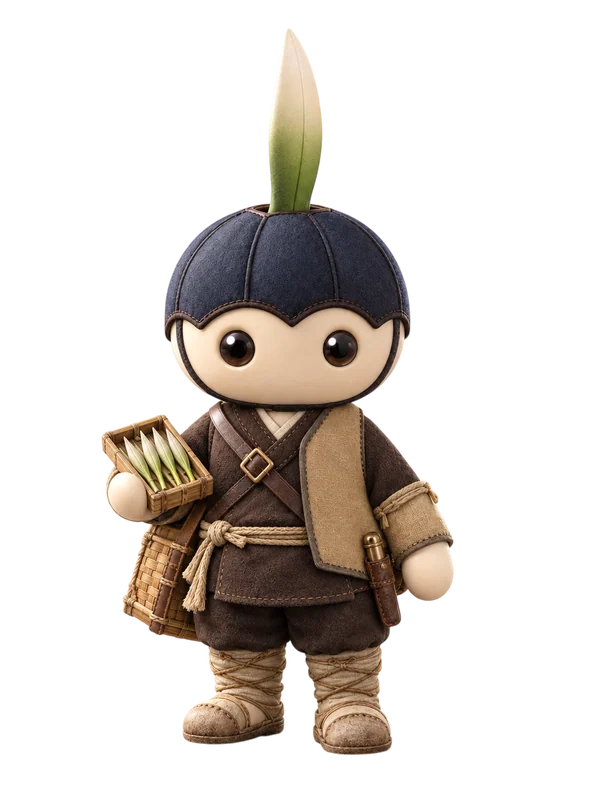
This is Razvozka. He hauls slab tea, salt and cloth around the encampments, and by the yurt he weighs out tea with a steelyard, breaking it off the brick.

full GLB · Hunyuan · full GLB · Hi3D

downloads open after a one-email sign-in — that is how the registry knows its guests

drag to rotate — a light 2 MB copy; full models below

PeopleTatars ·
RegionXinjiang: Gulja in Ili, Tacheng, Altay, Urumqi
Rolehaulers

Tea

Tea delivery to nomadic camps: Tatars who came to Xinjiang from the Volga region in the 19th century were chiefly engaged in trade — they carried 茶叶 cháyè, salt and cloth to the pastures of Tacheng, Altay and Ili, and on the way back took livestock raw materials and sold them in towns. Tea came in bricks, and on site it was weighed out for the buyer right at the yurt, chipped off the brick. Through Tatar shops in Ining, Tacheng and Dihua, calico, copper, iron, sugar and glass flowed in the opposite direction. At home they drink tea from a 茶炊 cháchuī, a samovar, just like their Russian neighbors.

Crown growth

A steelyard weight standing upright: a cast-iron pear set narrow end up, the eye forged flat and pressed against the body, weight notches scored along the side; warm graphite tone, tea dust from the weighed bundle stuck at the base — the thing tea was weighed with right at the yurt. The growth stands VERTICALLY: the horizontal plate is the Va’s. It differs from the Mulao throat in profile — there the wall is concave and flares downward into a bell lip with an open mouth, here the side is convex, the belly rounded, the body solid; from the Yao beater — in that there a thin handle steps out of a wide head, here the taper is continuous; from the Russians’ pipe — in a solid body with no bend.

Headdress

kalfak — a soft velvet cap of everyday cut: it hugs the crown closely, and at the back tapers into a neat cone that lies along the nape and is drawn tight at the end with a silk knot and short tassel; the fabric does not sag sideways or fold, the shape holds itself. Fine gold embroidery along the band. The slot for the yoke is in the crown, whip-stitched with cord.

Outline at 6 mm. A cap-pouch toward the back. The crown is covered, the whole mass gathered at the rear into a neat cone with a knot at the end: it differs from the Mulao in that the shape is rigid and directed strictly backward rather than drooping sideways in folds, from Ugolek — in that it does not descend onto the shoulders or cover the head as a triangle, from Bayczi — in the absence of two hanging ends.

Clothing

Camisole over a shirt, embroidered apron, soft ichigi boots, a leather pouch with weights at the belt.

Palette

Dark cherry velvet of the cap, dull gold embroidery, cream shirt, steelyard brass, boot ochre.

On the tea map

Xinjiang

← back to the line