01 Look
Front
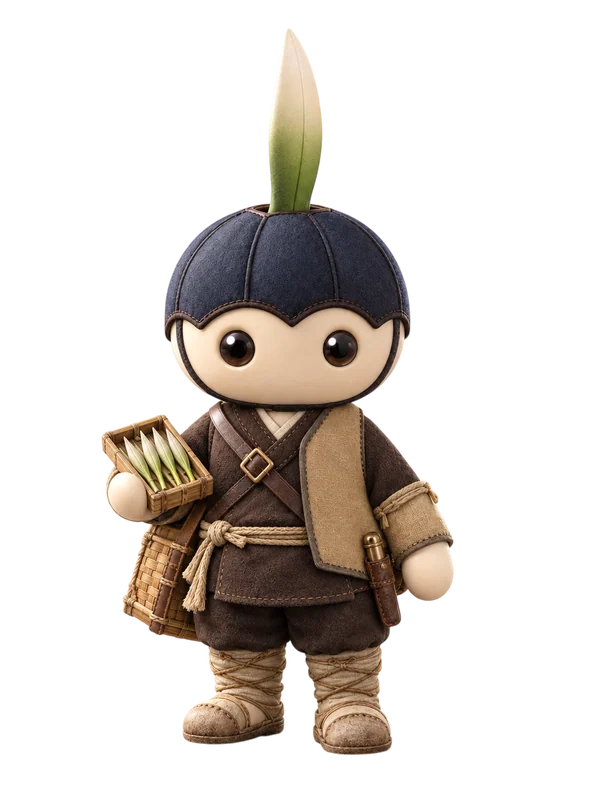
An indigo top, batik skirt and apron form Pushinka’s Duyun working outfit. A small basket and a tray of tea buds underline the careful gathering.
Grows Duyun Maojian; a downy bud, picking and sorting.
Cultural storiesGuizhou, Qiannan Prefecture: Duyun and Guiding; also Qianxinan
Carefully sorts delicate leaves and compares small handfuls.
The story / Pushinka
Her personal tea story is connected with Duyun Maojian.
Cultural context
Pushinka / Collection
An indigo top, batik skirt and apron form Pushinka’s Duyun working outfit. A small basket and a tray of tea buds underline the careful gathering.
A light-blue cotton top pairs with loose indigo trousers and a linen apron. A porcelain cup accompanies Pushinka’s home story with Maojian tea.
A short blue top with geometric shoulder details pairs with a blue-and-white batik skirt. Pushinka holds a cup of Maojian with both paws.
A dark top with elaborate geometric embroidery and a tiered batik skirt create the wedding silhouette. A silver chest ornament and wrapped tea gift complete Pushinka’s look.
Blue and red collars peek from a layered dark outfit, while plum skirt pleats echo the apron embroidery. Pushinka supports a small basket of tea leaves at the hip.
Black-and-blue layers with floral embroidery and a silver chest ornament create a formal wedding look. A folded head wrap frames the forked tea bud, with a small tea pouch secured at the hip.
00 / Original form
A straight pale-green bud has a small V-shaped split and soft down. A tiny body and a small pale face with amber eyes give Pushinka a delicate presence.
In motion
More from our world