01 Look
Front
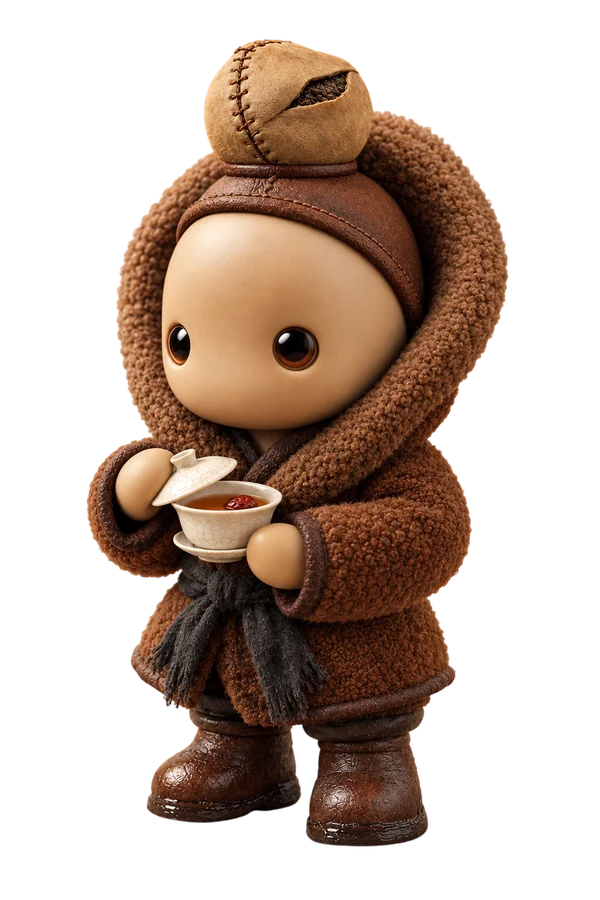
A short wool coat, ushanka and felt boots keep Prikuska warm. Tea and cherry jam remain close by; the raised hat flaps are tied behind the character’s own samovar pipe.
Samovar tea with cherry jam.
Cultural storiesXinjiang (Ili, Tacheng, Altay), Inner Mongolia (Ergun) and Heilongjiang
Makes an ordinary evening tea a little more festive with a spoonful of cherry jam.
The story / Prikuska
Loves familiar flavours and objects with a story of their own.
Cultural context
Prikuska / Collection
A short wool coat, ushanka and felt boots keep Prikuska warm. Tea and cherry jam remain close by; the raised hat flaps are tied behind the character’s own samovar pipe.
A cranberry sweater, slate-blue trousers and light-grey felt slippers suit tea at home. Prikuska supports a wooden tray carrying tea in a glass holder and a saucer of cherry jam.
A blue sarafan is worn over a white shirt, with neat embroidery and a woven sash. Prikuska carries tea in a glass with a metal holder.
A striped red, green and ochre sarafan with a red shugai jacket draws on Ust-Tsilma wedding dress. Prikuska keeps the familiar ushanka and carries a teacup on a saucer.
A blue sarafan, brocade sleeveless jacket and full embroidered sleeves are finished with a gold-toned headband. Prikuska holds a painted spoon and a birch-bark tea container with ring-shaped bread tied to it.
A red sarafan and white embroidered cape pair with a pearl-decorated koruna around the samovar pipe. Prikuska holds a tea-gift box with cherry jam, raising the other paw to the chest.
00 / Original form
A hollow samovar-like elbow grows directly from a round pale head. Small, widely spaced eyes leave the unusual crown in focus.
More from our world