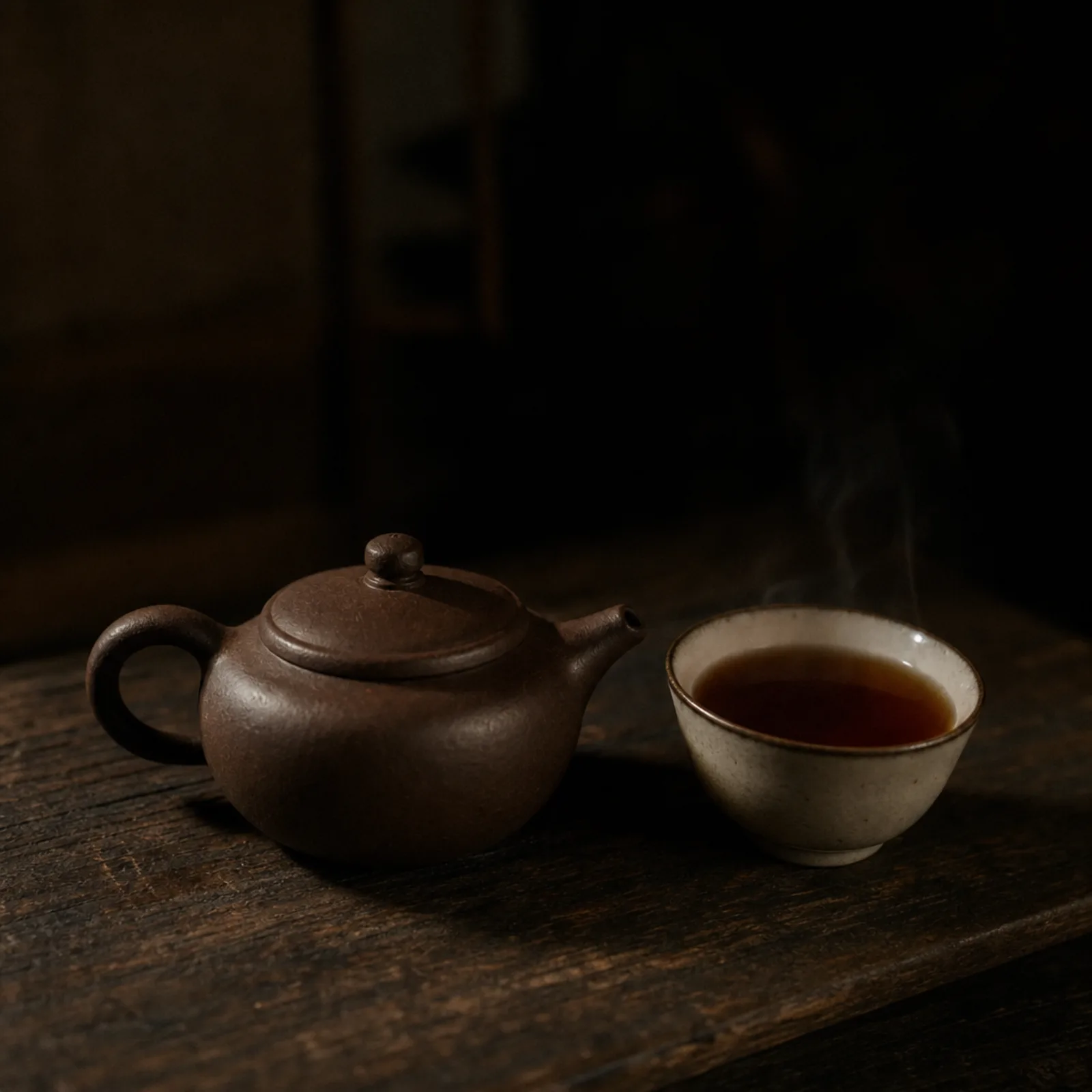
The living clay of the tea tray
Cháchǒng (chá chǒng, 茶宠) originate from the same tradition that gave us Yixing teapots. For centuries, potters in the Dīngshū region have moulded the purple zisha clay into small figural sculptures — animals, mythical beasts, and characters — not merely as trinkets, but as silent participants in the tea ceremony. Placed on the tea tray, or chábān, they receive the first rinse of each infusion. Over time, the tea oils, minerals, and repeated handling transform the raw clay into a deep, glossy surface with a warmth that only genuine use can impart.
Unlike glazed ceramics, zisha clay is porous, meaning it breathes and absorbs the essence of the tea. A well-fed tea pet will eventually release a faint, sweet aroma when warmed, and its colour shifts through amber to a deep mahogany — a living record of every variety you have ever poured over it. The three-legged toad, or sān jiǎo jīn chán, is a classic motif for prosperity; the pixiu (pí xiū) drives away malevolent energy while drawing in wealth. Our masters in Yixing and Dehua hand-build each figure using traditional techniques, signing every piece with a chop mark. For building the setting that holds them, tea.furniture offers a deep selection of purpose-built tea tables and trays. For a deeper dive into the cultural symbolism, the thetea.app encyclopedia covers each mythical animal. And if you’re new to the ritual, tea.school’s course on ‘Gongfu Cha Foundations’ guides you through every element, from the teapot down to the smallest cháchǒng.
Two classic faces, fresh from the studio
We work directly with potter Michael Zhan’s workshop in Dīngshū to bring newly finished tea pets — like the three-legged toad in purple zisha and the zhuni-red pixiu — that are ready to begin their journey with you.