| People | Manchus · |
| Region | Liaoning, Jilin, Heilongjiang; banner communities of Beijing and Hebei |
| Role | drink in their own way |
Tea
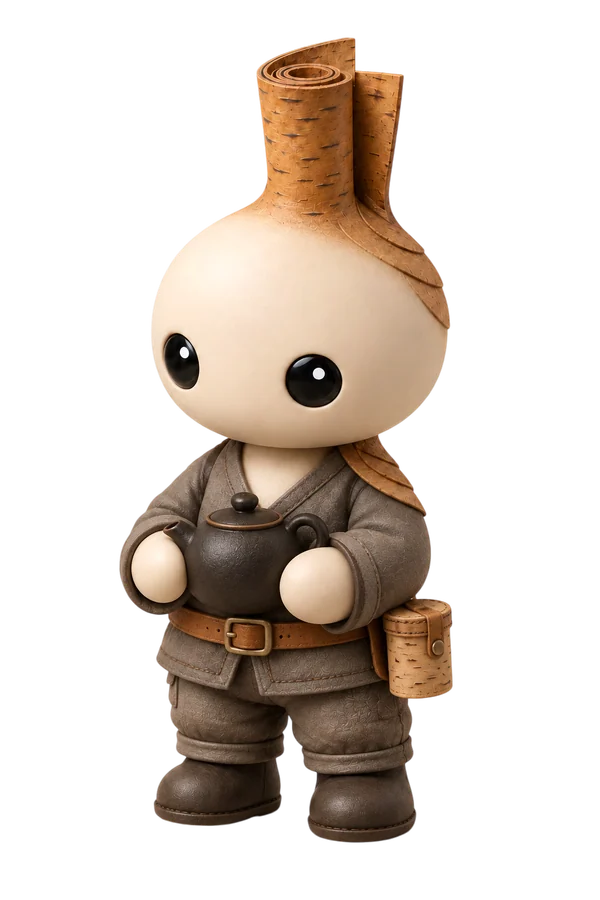
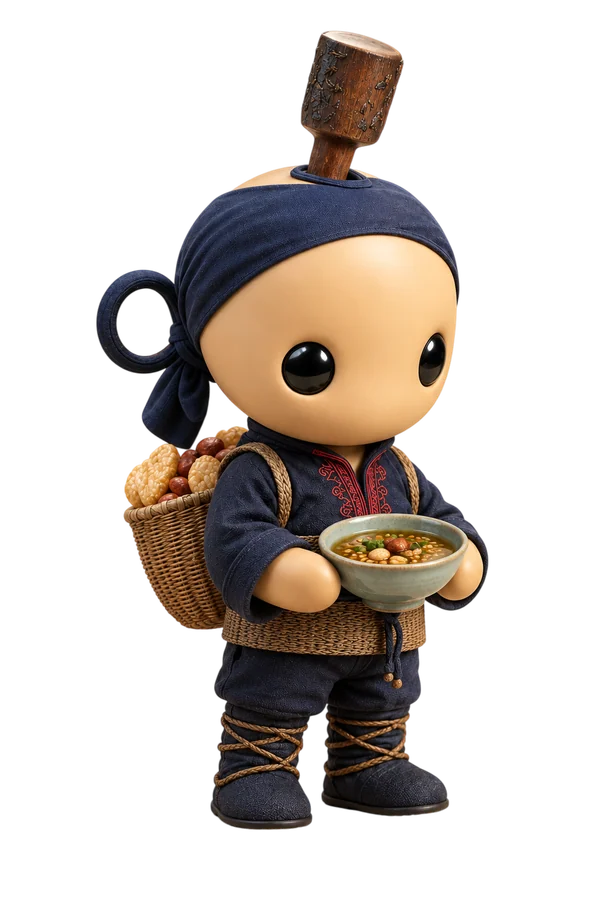
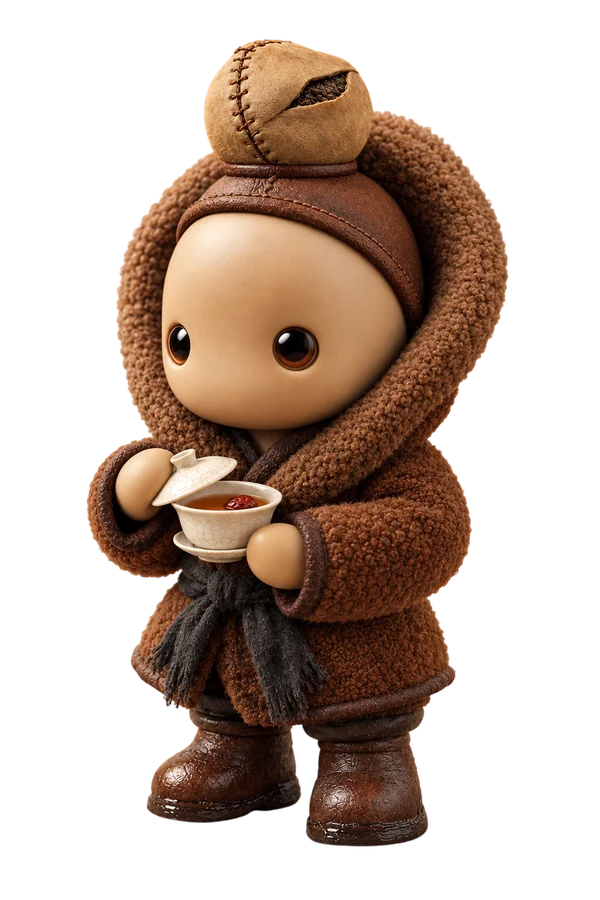
奶子茶 nǎizichá — milk tea served to guests in Liaodong and on the Songhua. The sequence is recorded in 《龙江三记》 «Lóngjiāng sānjì»: at a grand reception, the guest is first offered a pipe, then 奶子茶; 《清稗类钞》 notes milk tea as the daily drink of the eastern steppe, and the Qing court kept 奶茶 in its ceremonial — the milk tea utensils are described in the Palace Museum collection. There is no tea bush in Liaodong: coarse leaf 粗茶叶 cūcháyè arrived through trade, so on ordinary days they drank not that but 糊米茶 húmǐchá — millet 稷米 jìzimǐ roasted until singed and steeped in boiling water — and 糊饭嘎巴儿茶, water boiled on the burnt crust from the bottom of a cast-iron cauldron. The character’s signature is the guest-serving sequence and the lid lifted from the cup, not a milk recipe.
Headwear
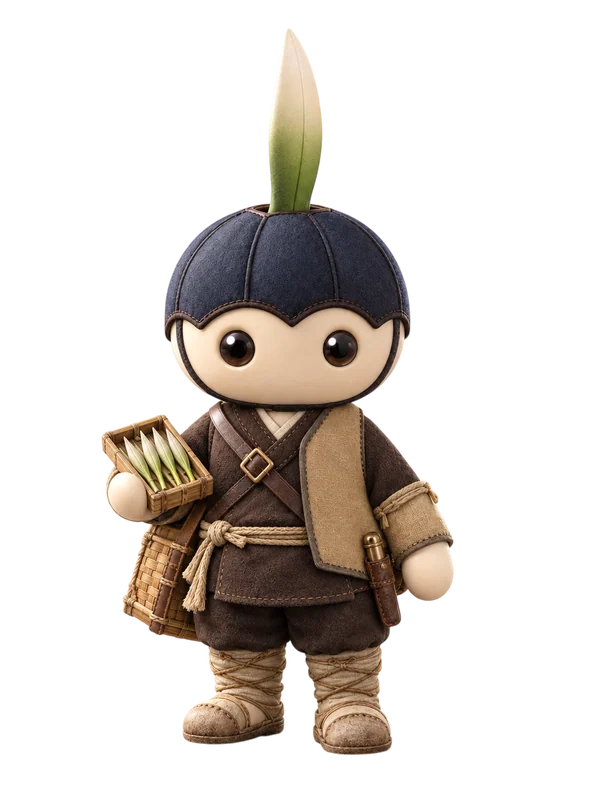
Guapimao 瓜皮帽 — a plain everyday cap of Manchu usage from the Qing era: six gores of black satin meeting at the crown, a narrow flat brim of the same satin around the circle, a low dome sitting in the usual manner on a shaved scalp. The distinct touch — in place of the silk knot-button at the top sits a tiny tightly rolled dried tea bud of honey-brown tone. There are no court 旗头/大拉翅 here.
Item
In hand a full gaiwan of three parts (lid slightly open, steam, jasmine blossoms on the infusion — 香片 of old Beijing banner households), tucked behind the sash a flat paper packet of loose jasmine with corners softened from wear.
Clothing
A straight dark-blue everyday robe with an overlapping diagonal closure, narrow braid along the front edge, cloth belt wrapped twice, canvas wrist guards. No chest badges, no rank embroidery.
Palette
Indigo and dark gray in clothing, black satin of the cap, bone and milky white of the lid, the single accent spot — a brown tea ring along its rim.