01 Look
Front
An indigo sleeveless top and straight skirt accompany Nochyovka’s tea gathering. A bast shoulder patch and bamboo containers add a practical texture.
Shuiman large-leaf tea from Hainan; picking in forest gardens, bamboo water and tea.
Cultural storiesHainan: Wuzhishan, Qiongzhong, Baoting and Ledong
Returns from tea country with a store of impressions and shares them little by little.
The story / Nochyovka
Loves a quiet evening with Hainan tea after a long day.
Cultural context
Nochyovka / Collection
An indigo sleeveless top and straight skirt accompany Nochyovka’s tea gathering. A bast shoulder patch and bamboo containers add a practical texture.
The soft ochre linen dress wraps at the side and is edged with a narrow indigo border. Closed slippers complete Nochyovka’s quiet home outfit. A bamboo cup of tea remains in the paws.
Fine pale woven patterns decorate the indigo top and long tubular skirt. A bamboo cup of tea completes this Meifu-inspired outfit.
A white formal top with dark woven edging pairs with a long geometric-patterned tubular skirt and a silver belt. A tea vessel is part of Nochyovka’s wedding look.
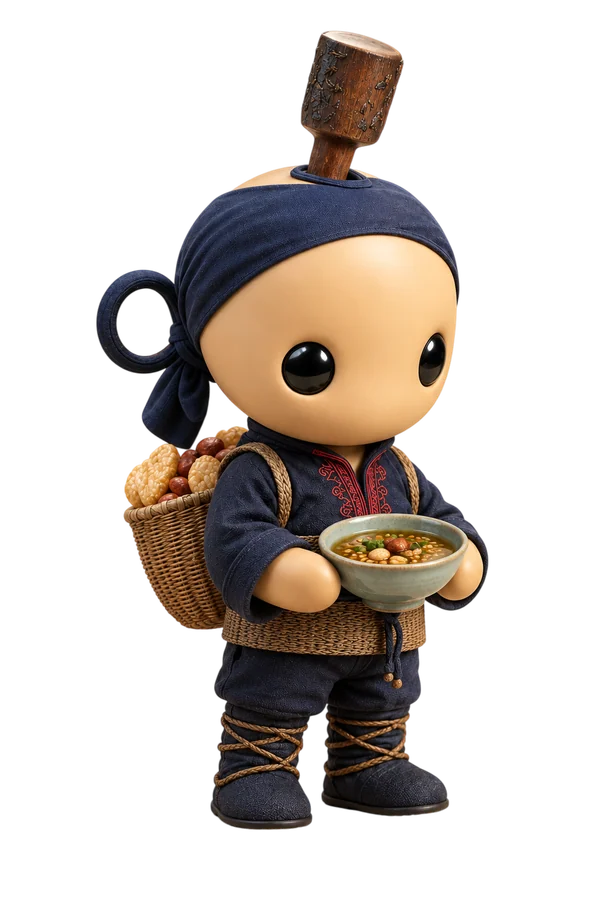
The dark indigo outfit brings together a long straight skirt, an embroidered head wrap and a scarf. Nochyovka holds a green tea shoot, with bamboo tea containers secured at the hip.
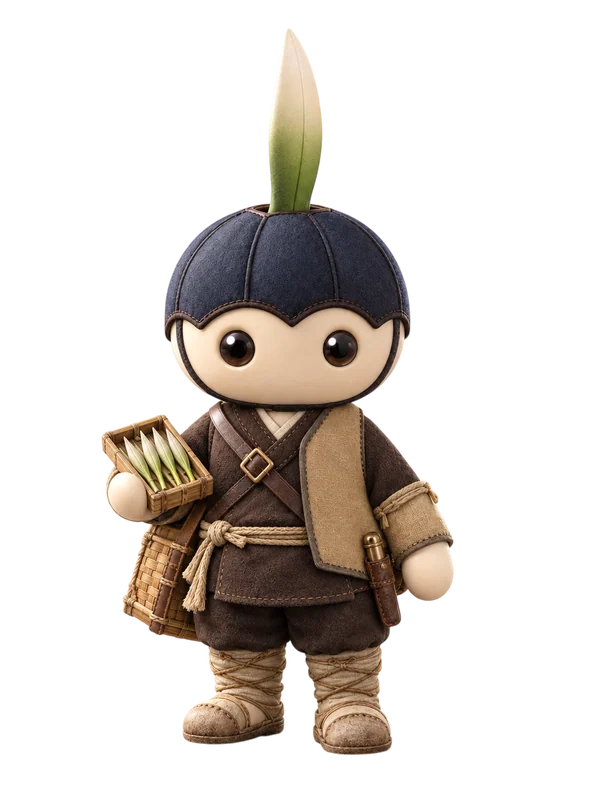
A pale V-neck tunic with wide embroidered sleeves pairs with a short skirt of geometric bands. A tea basket hangs from a shoulder strap, while the free paw rests at the chest.
00 / Original form
A woody tea seed capsule with narrow seams, a seed and a sepal grows above a smooth honey-ochre head. Long undivided paws balance the small round eyes.
More from our world