01 Look
Front
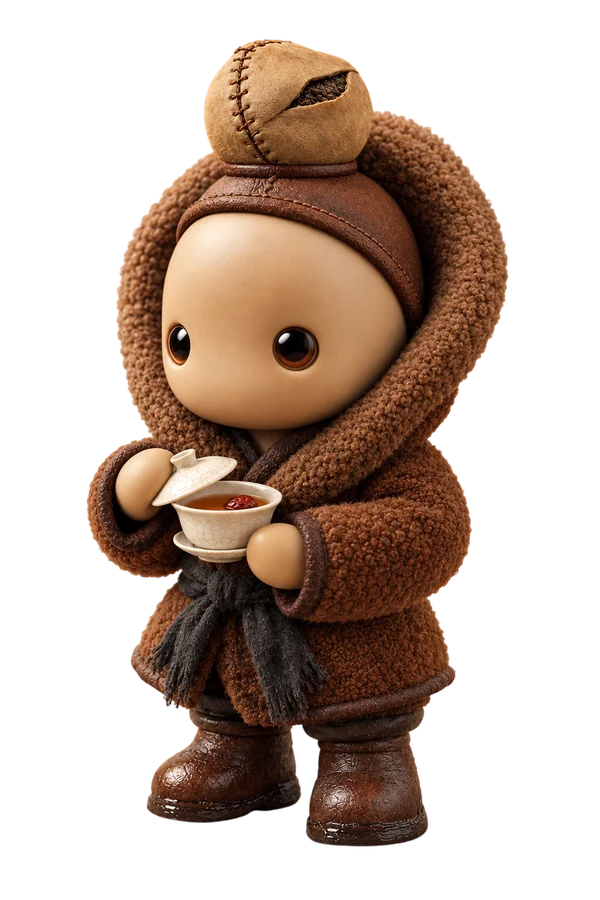
A wool robe and tall tumak hat keep Nedokip warm in this Pamir-inspired look. A leather pouch carries broken tea, while a bowl continues the milk-tea story.
Boiled milk tea, using tea fragments from a compressed slab.
Cultural storiesXinjiang, Taxkorgan Tajik Autonomous County in the Pamirs
Gets ready to leave a little earlier than everyone else, but always finishes making the tea.
The story / Nedokip
Prefers one reliable vessel to a large set.
Cultural context
Nedokip / Collection
A wool robe and tall tumak hat keep Nedokip warm in this Pamir-inspired look. A leather pouch carries broken tea, while a bowl continues the milk-tea story.
A milk-white quilted jacket, taupe trousers and felt slippers soften the silhouette. Nedokip holds a glazed bowl of milk tea, with a wrapped tea brick peeking from a pocket.
A dark-blue chapan is worn over a pale shirt and gathered with a broad patterned sash. Burgundy boots and milk tea complete the Tashkurgan-inspired festive look.
A black chapan, white shirt and woven sash form the groom-inspired outfit. The hat’s red-and-white wrap echoes the Pamir theme, with milk tea close at hand.
Narrow red-and-white edging accents the dark wool chapan, balanced by a broad belt and tall hat. Nedokip rests a paw at the chest; a copper teapot sits in a leather carrier at the hip.
A dark-blue velvet chapan opens over pale clothing, with a red embroidered sash echoing the hat’s red-and-white wrap. The paws spread in a dance gesture, while a tea caddy stays secured at the waist.
00 / Original form
Two unequal joined bubbles lean above a cream face, with two small tea leaves at their base. Large dark-brown eyes echo the rounded shape.
More from our world