This page is the production line of the registry,
published while it runs. Every figure below was generated from its canonical
frame by two independent 3D engines; every model is downloadable; every
canonical prompt is printed in the open. Colour separation is done by hand,
one figure at a time, and finished print files appear on the
print files page as they are ready.
The idea of the collections
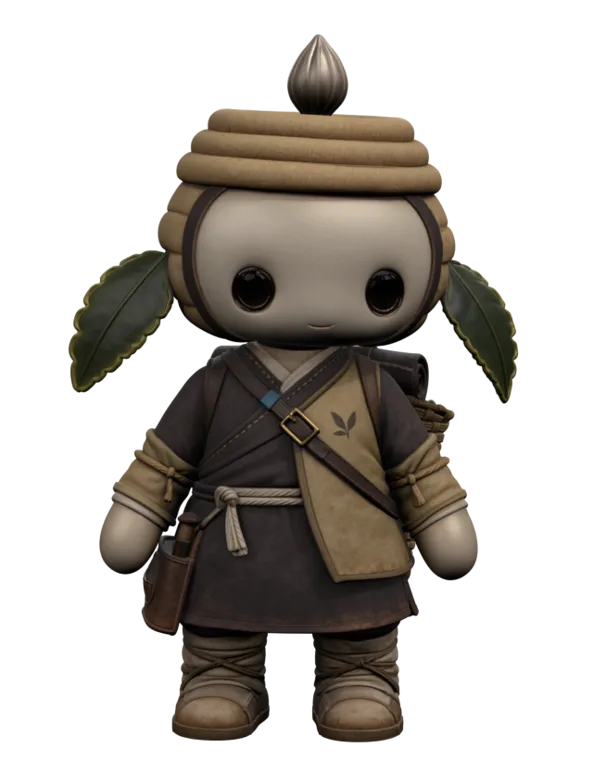
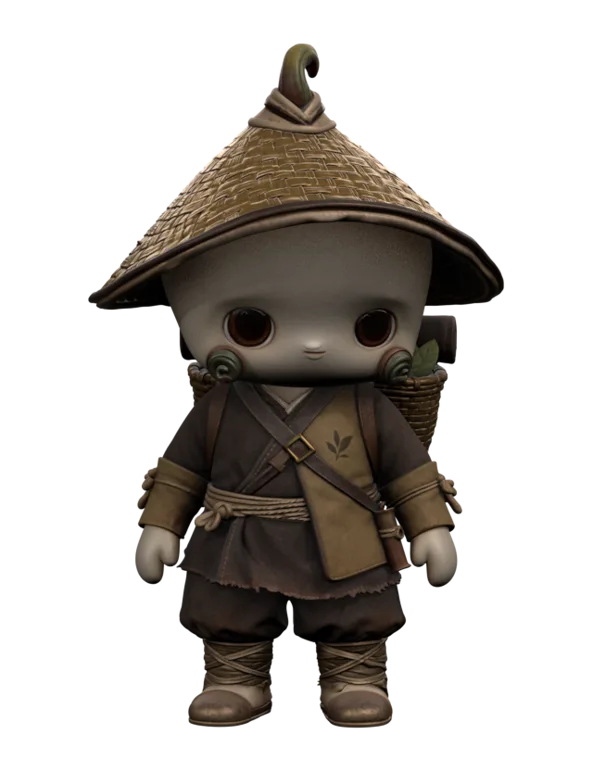
The nine are keepers of the tea year: each is bound to a
tea class and a stage of the craft — the one who tends the charcoal baskets,
the one who waits out the twenty days of a bud, the one who carries the brick
down the mountain. Between them they close the year with no gaps. Here they
travel: the nine below wear their travelling costume.
The fifty-six collect the tea customs of the 56 ethnic
groups of China. The unit of the set is the custom — the way tea is made or
drunk — and the people lives in the record as its keeper. No ranks, no
rarity tiers, no secret figure.
How a figure is made
One canonical frame → two textured 3D models (Tencent Hunyuan 3D Pro at
1.5M faces with PBR, and Hi3D at 2048 quality) → a human picks the better
body and lays out four filament colours by hand → our open pipeline welds,
cleans and slices it for a Bambu Lab H2D Pro. The numbers behind every step
are measured, not estimated — the full story lives on the
print files page.
The nine, travelling

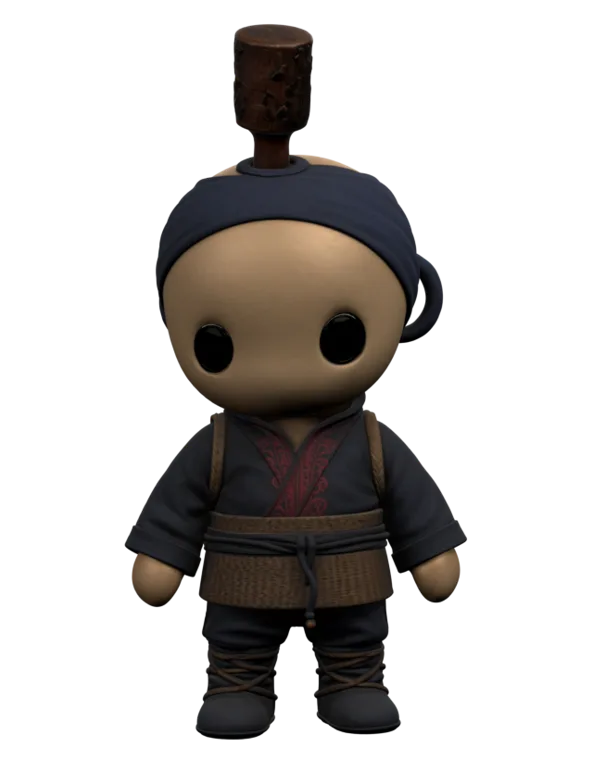
berestka-evenki
This is Berestka, an Evenk for whom tea was always someone else's goods, while his own remained the iron cauldron, birchbark containers, and the red tassel at the back of his head.
awaiting colour
boyok-yao
This is Boyok. He drinks tea his own way: the leaf is not steeped but beaten in a cauldron with ginger and garlic until it gives everything to the buttery brew.
awaiting colour

brodok-baoan
This is Brodok, a Bonan from the Linjindu crossing, over which border tea went west, and his job is to keep the ferry going while the bales are hauled across the river.
awaiting colour

bubenczik-dunsyan
This is Bubenchik. He walks with a pack through the fog, and ahead the sound of his little bell tells the caravan who is coming.
awaiting colour

cheshuyka-hechzhe
This is Cheshuyka. He remembers a time when tea reached the Hezhen only by river through Sanxing, and they boiled it in an imported iron cauldron.
awaiting colour
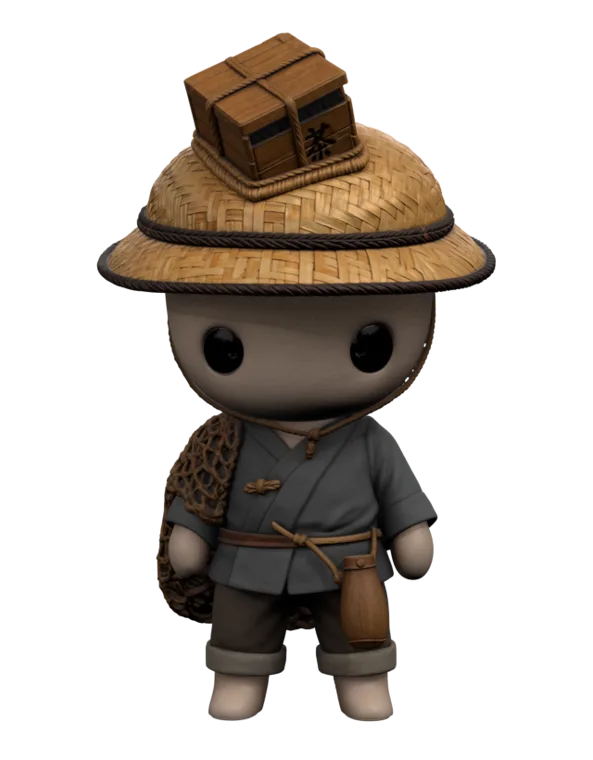
cibik-czin
This is Tsibik. He carries tea by sea from the shore of Beibuwan, and on the top of his head rests a small plank crate with the stenciled mark 茶.
awaiting colour
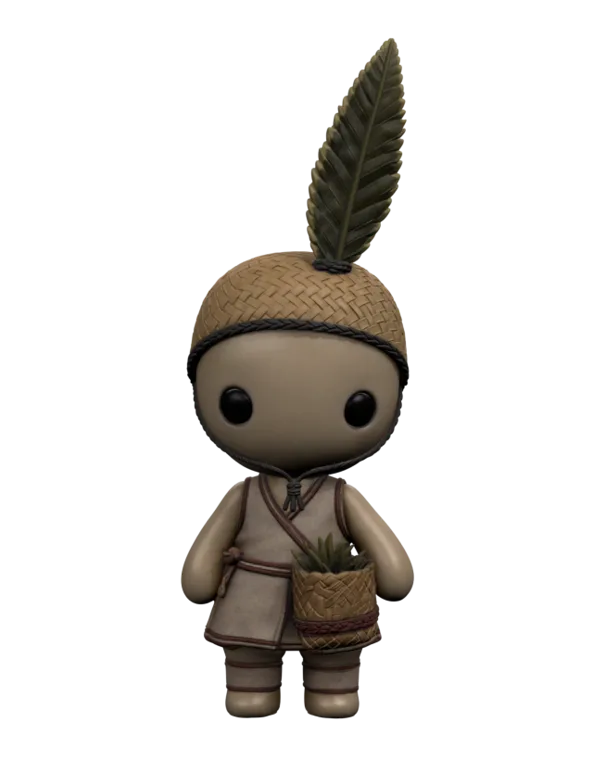
dichok-gaoshan
This is Dichok, a Gaoshan whose custom of taking mountain leaf first became what holds the whole set together: growing it, hiring the pick, and sending the leaf to Wuyishan for finishing.
awaiting colour

dnevka-kirgizy
This is Dnevka. He remembers that herders have only one solid meal, in the evening, and through the whole daylight hours on pasture they keep going on salted tea with milk, refilling the cup up to ten times.
awaiting colour

dudka-day
This is Dudka. He cuts a fresh joint of sweet bamboo, packs it with steamed tea, and roasts it over the coals until the stalk gives its scent to the leaf.
awaiting colour
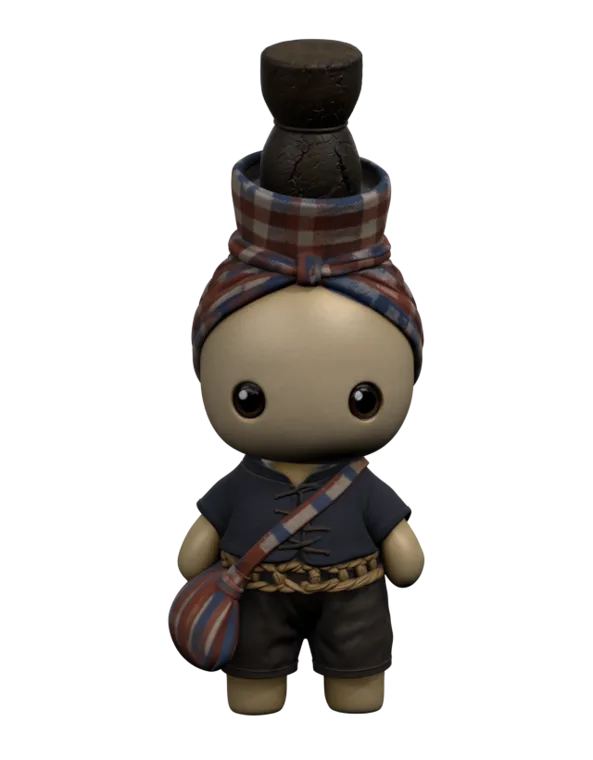
gnetok-czinpo
This is Gnetok. He is one of those who drinks his own way: he boils tea right in a fresh bamboo joint over the hearth until the water boils.
awaiting colour
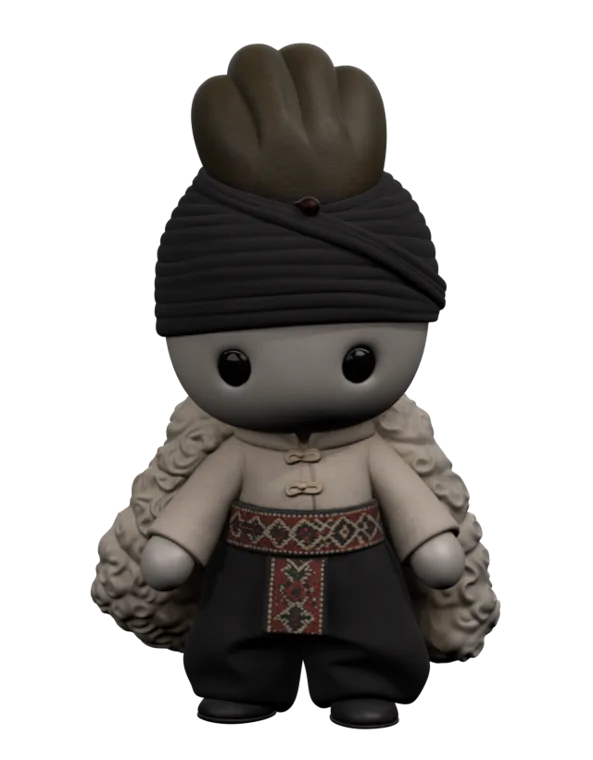
gorchinka-pumi
This is Gorchinka. He wears a squeezed-out brew on the crown of his head, and beneath it he remembers that the Pumi drink tea no fewer than three times a day.
awaiting colour

gorshok-mulao
This is Gorshok, the coal-clay ware of the Mulao, in which tea water is boiled over coal mined in Luocheng since the early Song.
awaiting colour
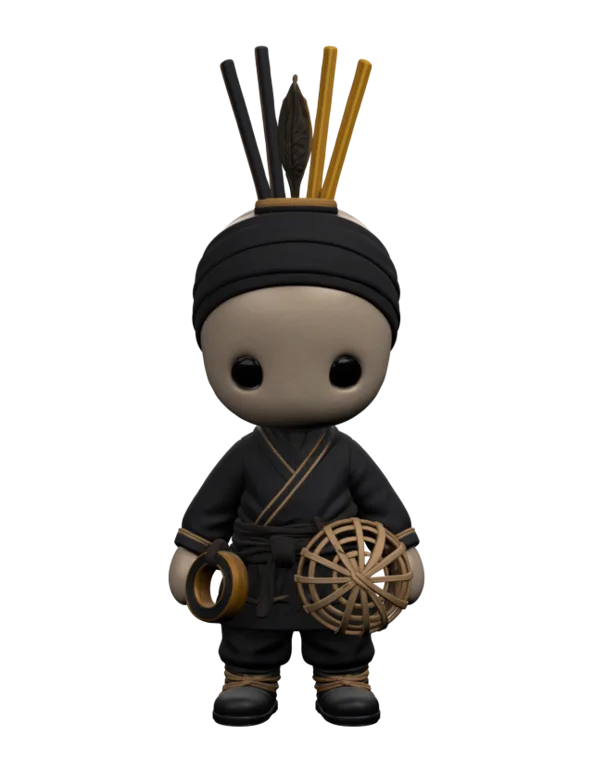
gostinka-maonan
This is Gostinka. She keeps the market day, when bought tea leaf gathers in a land with no gardens of its own, while she herself weaves containers and a fan from five dyed splints.
awaiting colour
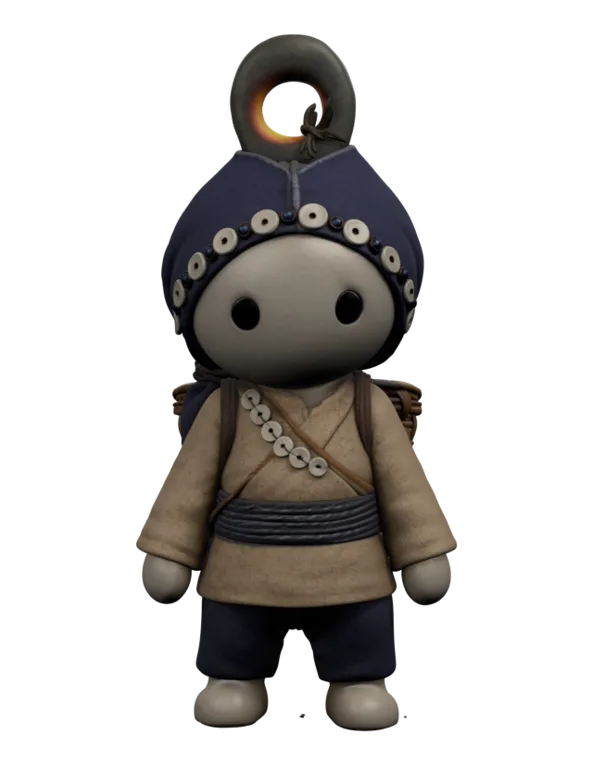
kamenka-lisu
This is Kamenka. She keeps a clay jar with resin and icy spring water so the infusion does not darken before the moon rises.
awaiting colour

kirpicz-kazahi
This is Kirpich. He keeps the saying that three days without bread is better than one day without tea, and salts the milk brew as it should be.
awaiting colour

kolczo-i
This is Kolcho. He grows tea for a little pot that is fired over coals, the leaf roasted until it smokes, and then boiling water with salt is poured over it.
awaiting colour
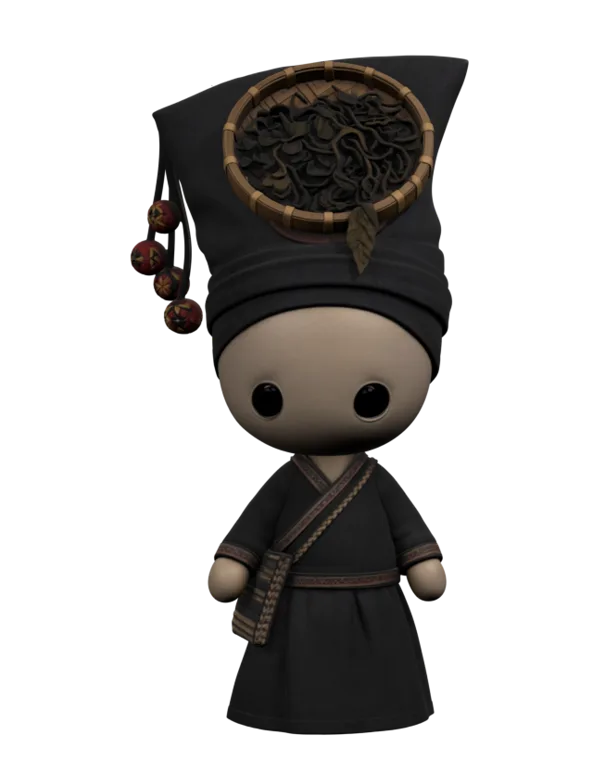
korchaga-achany
This is Korchaga. She carries on her head a round bamboo tray piled with wilted leaf, which the Achang then fire in a cauldron.
awaiting colour
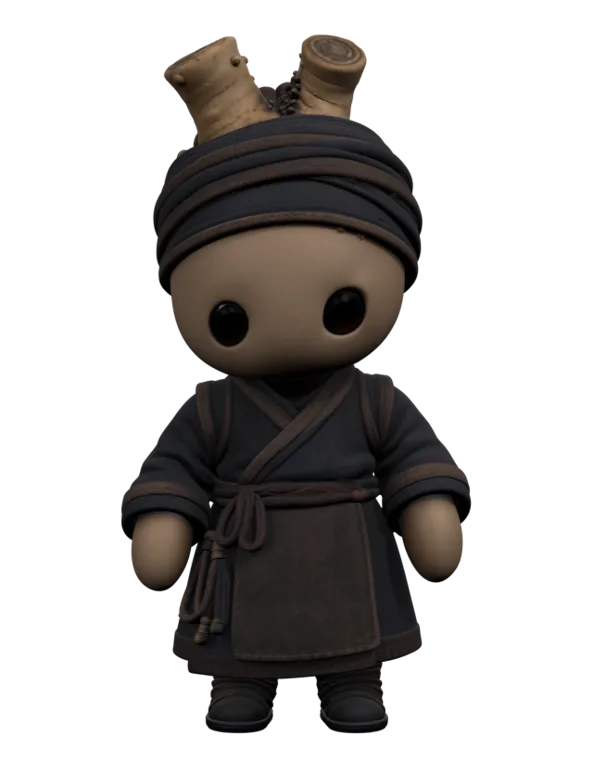
koreshok-gelao
This is Koreshok. He wears on the crown of his head a fork of old ginger rhizome and remembers that in damp Guizhou the leaf is boiled with ginger, not simply steeped.
awaiting colour

korica-uygury
This is Korica. He boils broken fu zhuan in a copper kettle, adds pepper, ginger and cinnamon, and drinks tea three times a day with flatbread as a meal.
awaiting colour
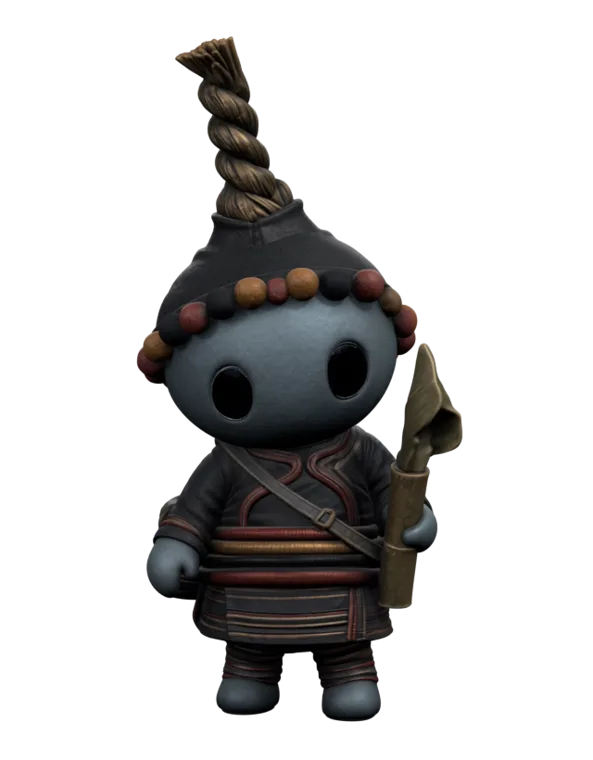
kosicza-dean
This is Kositsa. He wears five lacquered rattan hoops at his waist and pulls from a pit a bamboo stalk in which the leaf fermented without oxygen for fifty to seventy days.
awaiting colour

kotelok-orochony
This is Kotelok. He reminds us that for the Oroqen tea begins not with the leaf but with an imported iron kettle traded from fur buyers for sable.
awaiting colour

kovshik-mongoly
This is Kovshik. He lifts the brew with a ladle and pours it back into the cauldron until the count reaches eighty-one, and then the decoction becomes even.
awaiting colour
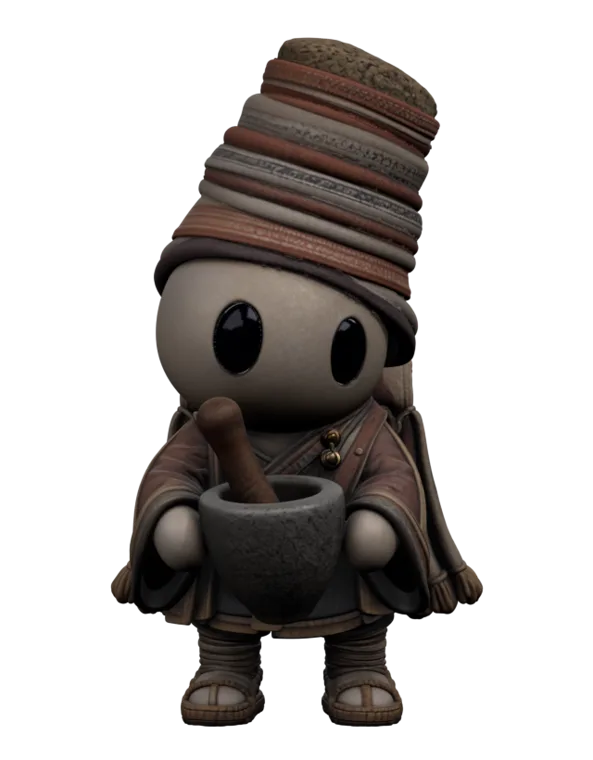
krupka-tuczya
This is Krupka, a Tujia who keeps a stone mortar and pestle at hand so a guest can always get tea ground with roasted grain.
awaiting colour

kryshka-manchzhury
This is Kryshka. He remembers that among the Manchu a guest is first offered a pipe, then milk tea, and on ordinary days they drink not leaf but roasted millet and water with a scorched crust.
awaiting colour
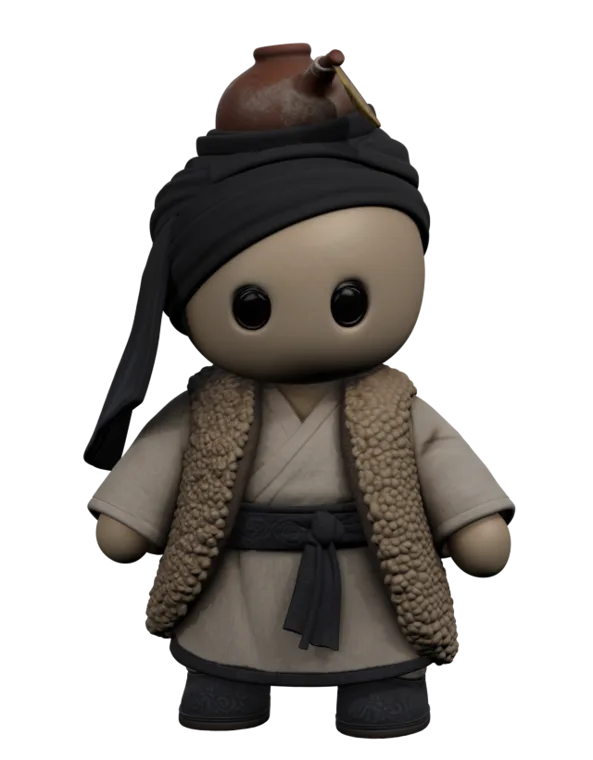
kubyshka-cyan
This is Kubyshka. She boils tea in a pot-bellied clay jug right by the hearth, sets it sideways in the heat and tops it up, and in the morning this drink serves as food.
awaiting colour
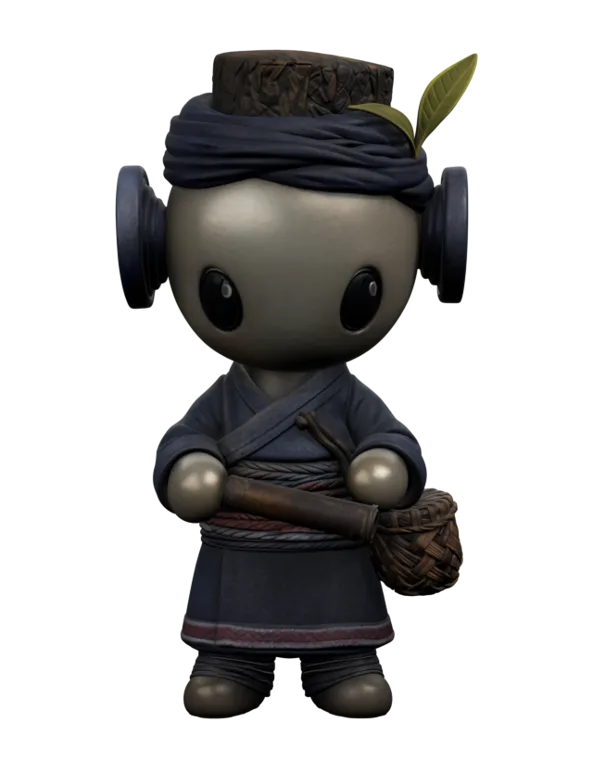
kvasha-bulan
This is Kvasha, keeper of the suancha custom: leaf fermented in a bamboo stalk, buried in a pit for four to nine months, and the bitter raw material of old gardens.
awaiting colour

maslik-dun
This is Maslik. He pounds oil-roasted leaves in a cast-iron pot and reminds us that Dong youcha is eaten, not drunk, and no one leaves without finishing the fourth bowl.
awaiting colour

mutovka-tibetcy
This is Mutovka. He holds a narrow wooden churn and beats the butter tea with a plunger up and down until the fat disperses and the drink becomes uniform.
awaiting colour

myatka-czino
This is Myatka, from Mount Youle, the first of the six ancient tea mountains, where fresh leaf is kneaded by hand in a bamboo trough with salt and pepper.
awaiting colour

navarka-tu
This is Navarka. He stands at the receiving end of the route, where Hunan brick is broken up, measured with a wooden measure, and sent out to the pastures in exchange for hides and wool.
awaiting colour

nedokip-tadzhiki
This is Nedokip. He is one of those Tajiks who live above three thousand meters, and so he does not steep tea but boils it long in a cauldron until one or two large bubbles rise.
awaiting colour
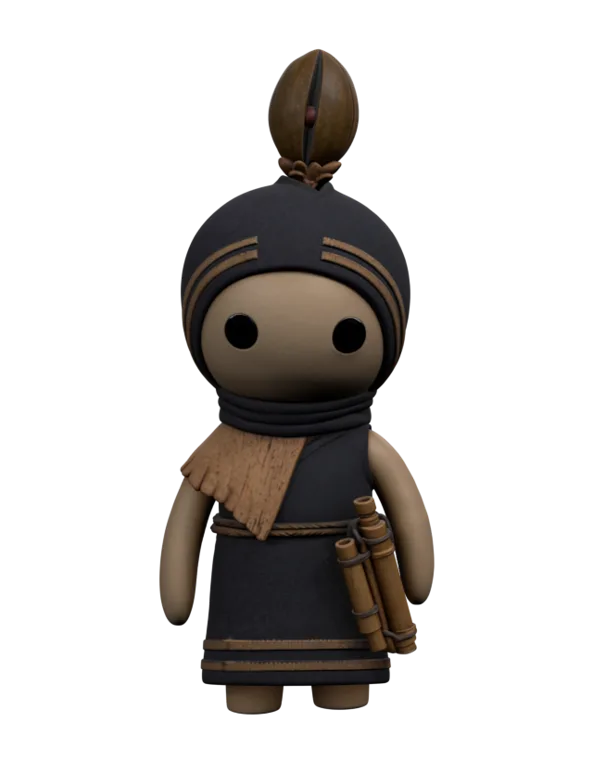
nochevka-li
This is Nochevka. She is Li, and in her custom a work crew of over a hundred people camps in the mountains ten days before and ten after Qingming, checking the tenderness of the leaf by scent.
awaiting colour
penka-bay
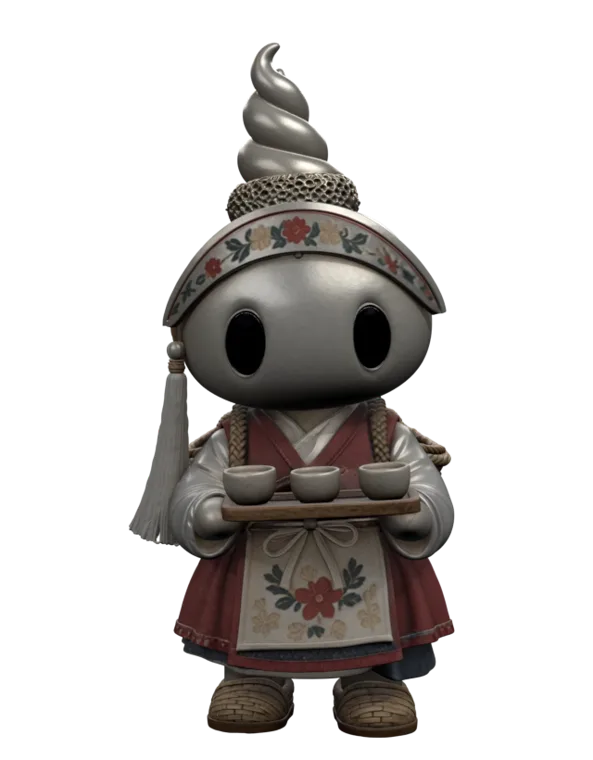
This is Penka. He wears a spiral of whipped froth on the crown of his head and holds a tray with three bowls, so the guest may travel from bitter to sweet and to the aftertaste.
awaiting colour

perevalka-shuy
This is Perevalka, a Shui from Sandu, where the pack trail ended and the water began, and in the knot atop his head is tucked a leaf from a bale that came undone.
awaiting colour

plashka-va
This is Plashka, a Wa from the old gardens of Lincang. She lays the leaf on iron and holds it over the fire until the edges curl up like a little boat.
awaiting colour
plotik-salary
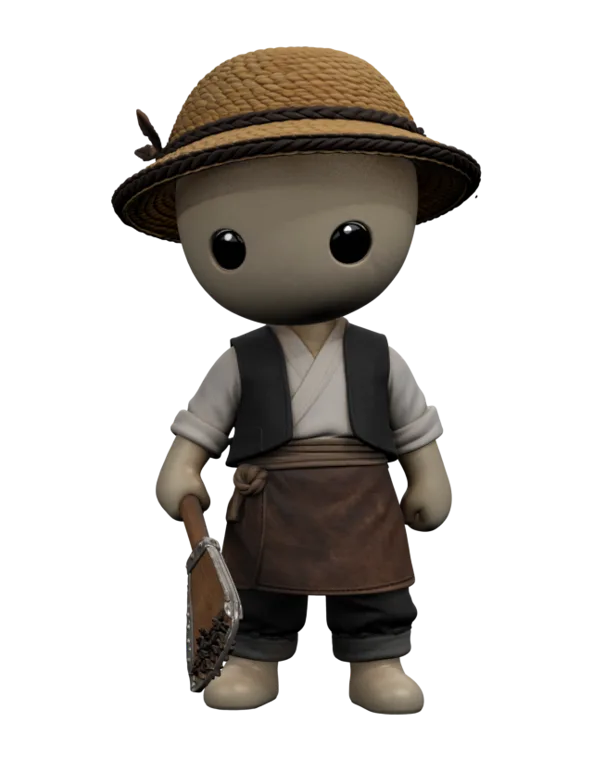
This is Plotik, a Salar who for seven centuries carried people and cargo down the Yellow River on inflated rafts, and on the return trip hauled brick tea up into the valleys for boiling.
awaiting colour
prikuska-russkie
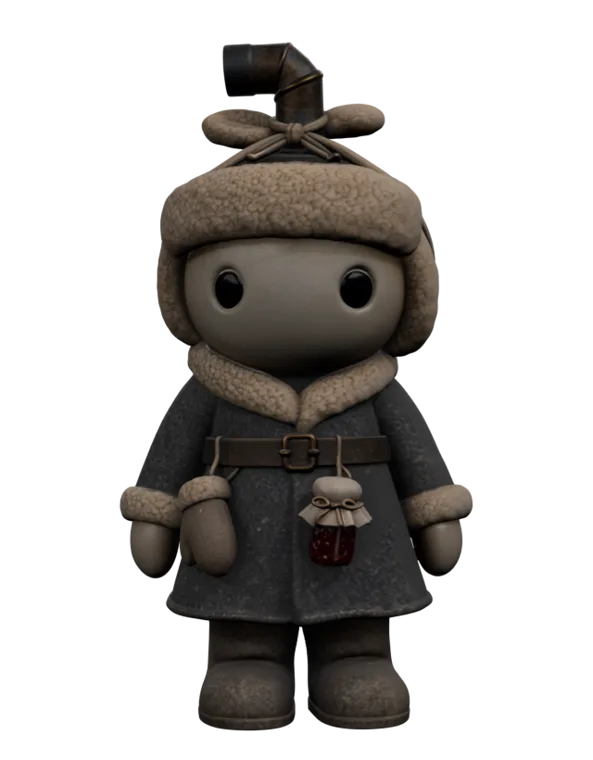
This is Prikuska. He drinks tea the Russian way in Xinjiang and along the Argun: as a bite with jam, by the samovar, and with his own bread.
awaiting colour
pushinka-bui
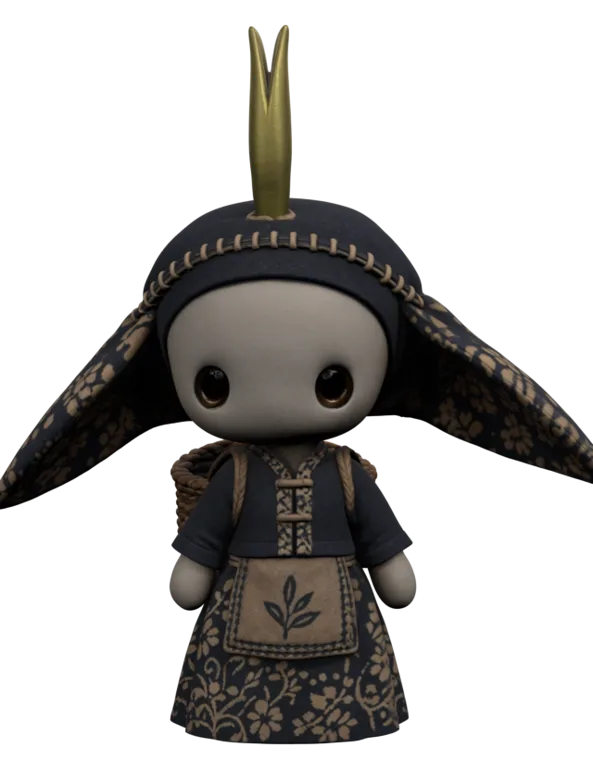
This is Pushinka, the Bouyei who grow Duyun Maojian: in March and April their tea yards hold a ceremony of sacrifice to the tea deity, asking for the harvest to be preserved.
awaiting colour

razvozka-tatary
This is Razvozka. He hauls slab tea, salt and cloth around the encampments, and by the yurt he weighs out tea with a steelyard, breaking it off the brick.
awaiting colour
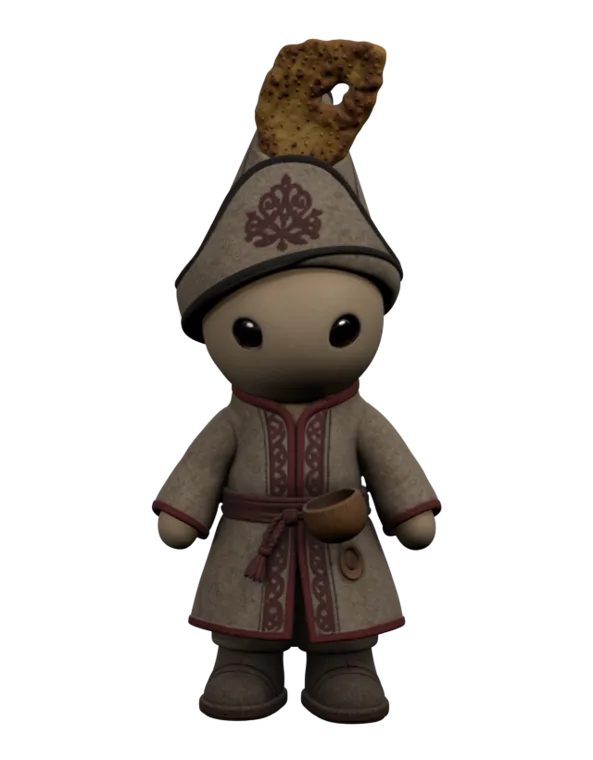
sduvka-yuygu
This is Sduvka. He is Yugur and drinks tea with a shake of the head: he blows away the film and shakes his head left and right so the flour does not stick to his lips.
awaiting colour
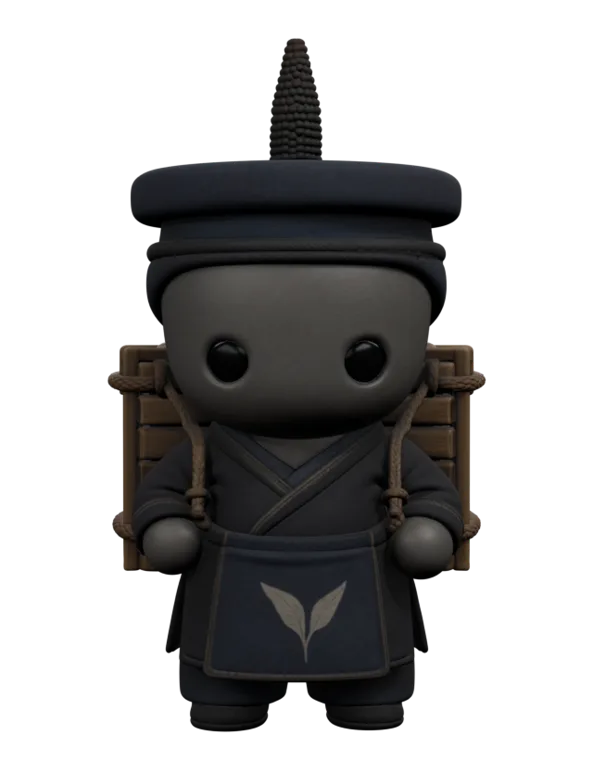
sitko-myao
This is Sitko, a Miao from Chengbu: he lays wild leaf in layers in bamboo crates, pours rice water over it, and waits for the night caterpillars to eat the leaf, then sifts their grains into the brew.
awaiting colour
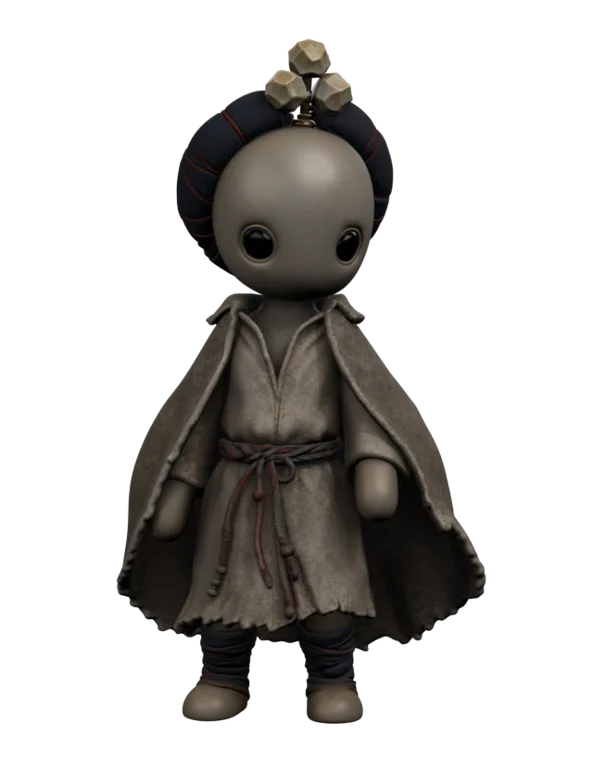
smolka-nu
This is Smolka. She drinks her own way: without yak butter, with lacquer-seed oil instead, and the tea in her kettle is always roasted to a slight scorch.
awaiting colour
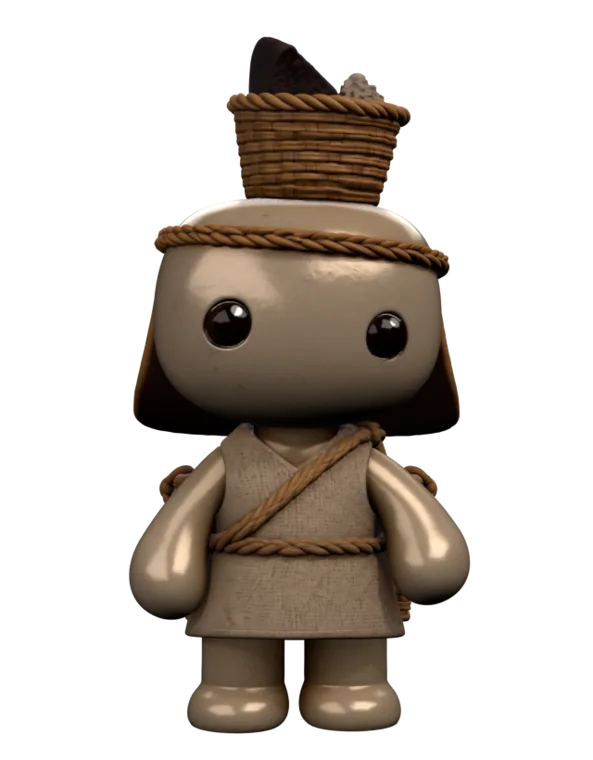
solinka-loba
This is Solinka, a Lhoba from Luoyu, who carries a woven basket to the Tibetan side and brings back broken pressed tea taken in trade.
awaiting colour
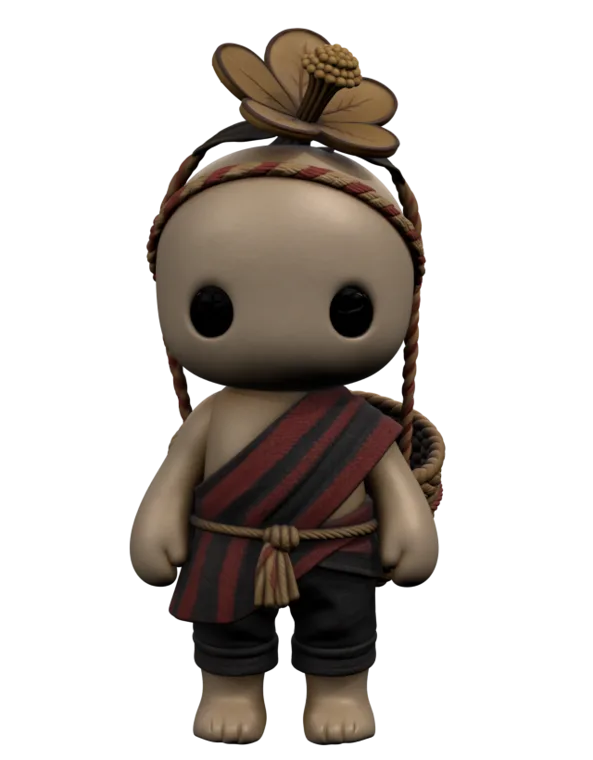
solonka-duluny
This is Solonka. He carries rock salt and broken tea in a back basket, to boil them in a bamboo joint the way the Dulong do.
awaiting colour

stupenka-chzhuany
This is Stupenka, a Zhuang woman: she grows tea on the Longji terraces and wears her headscarf so the ends do not hang into the bush.
awaiting colour
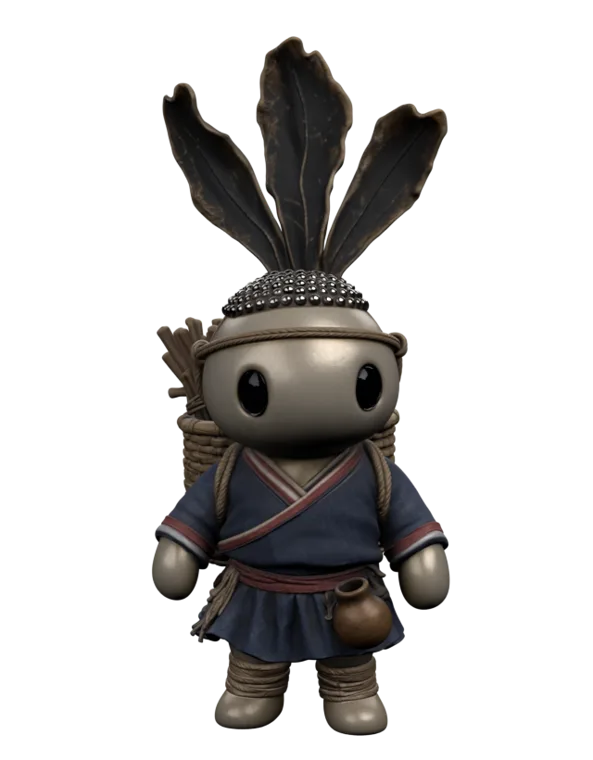
sushka-hani
This is Sushka, a Hani from Nannuo Mountain: she carries a basket on her back with a headband, so her hands stay free for picking the large leaf.
awaiting colour
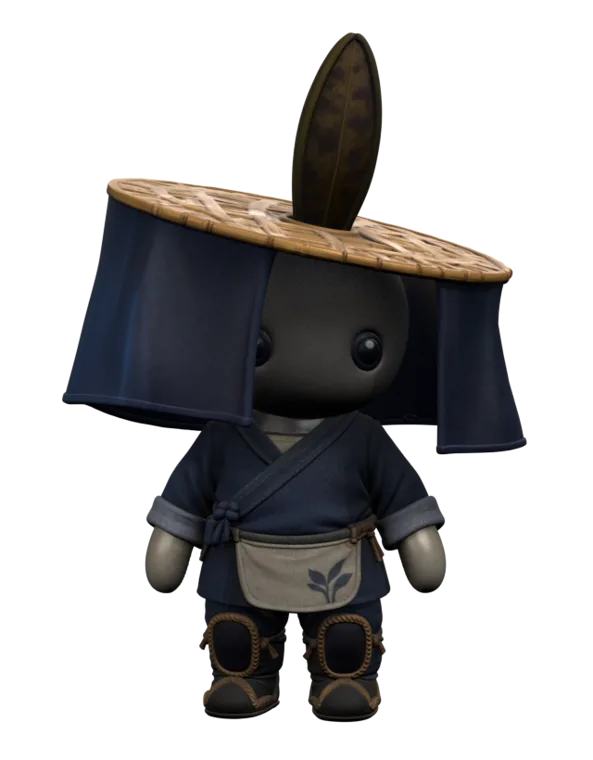
tolkusha-han
This is Tolkusha, Han who drink their own way: the leaf is not steeped but ground in a clay mortar into a thick paste-porridge.
awaiting colour

tumanka-menba
This is Tumenka: a Monpa from Motuo County, he wears a balsya cap with a cutout over the right eye and delivers the spring leaf by the norm of "one bud, two leaves."
awaiting colour
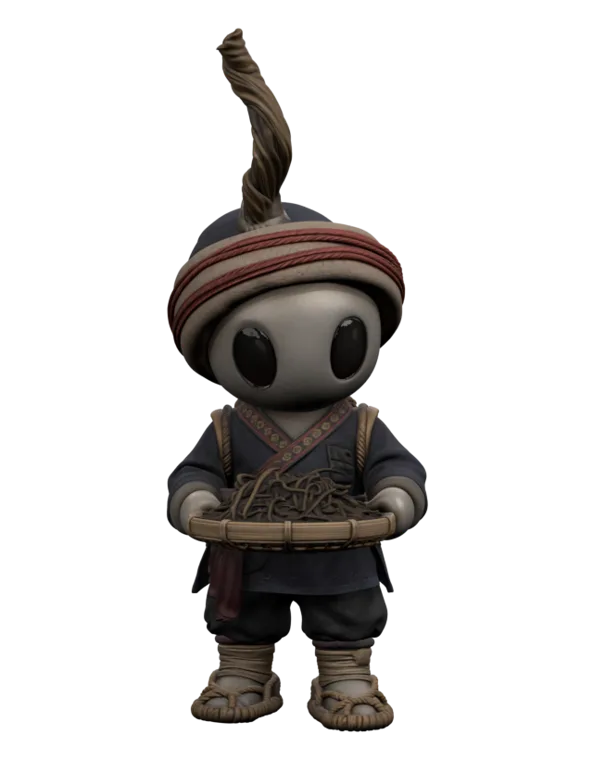
vitka-she
This is Vitka. She holds a bamboo sieve with wilting leaf while the she leaf gives up its moisture before rolling.
awaiting colour
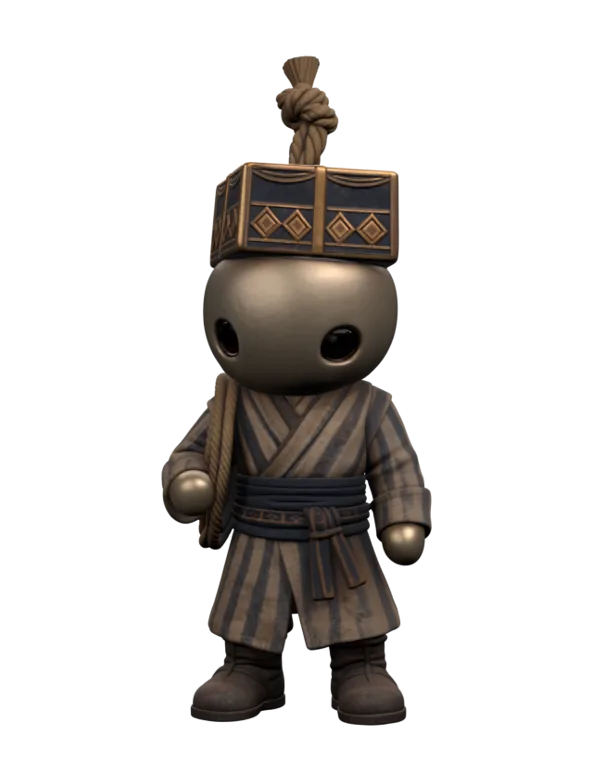
vjuczok-uzbeki
This is Vyuchok. He hauls tea in slabs through Yarkand and Aksu to Suzhou, because that way the tea does not break or burn, and at the western end it is resold to Fergana and Bukhara.
awaiting colour
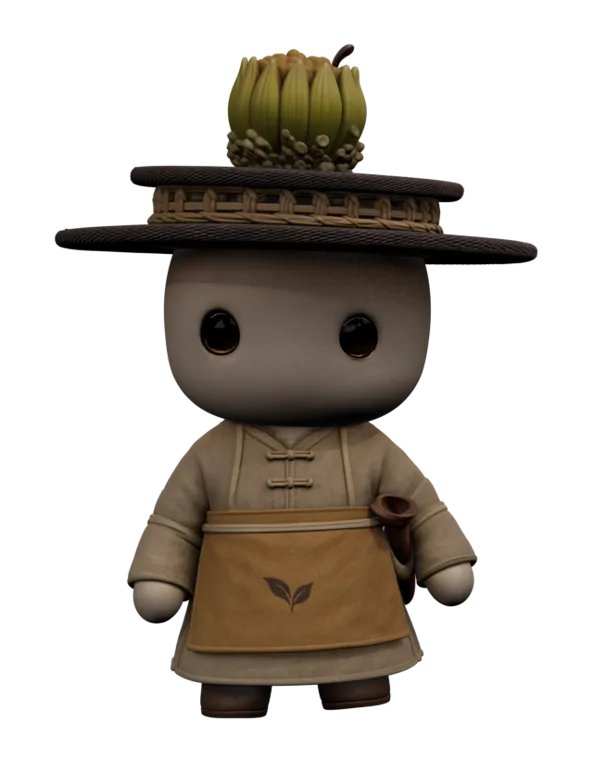
vosmerka-huey
This is Vosmerka. He hauls what belongs to others and sees to it that the roads of the four directions meet in one cup, not four excuses.
awaiting colour
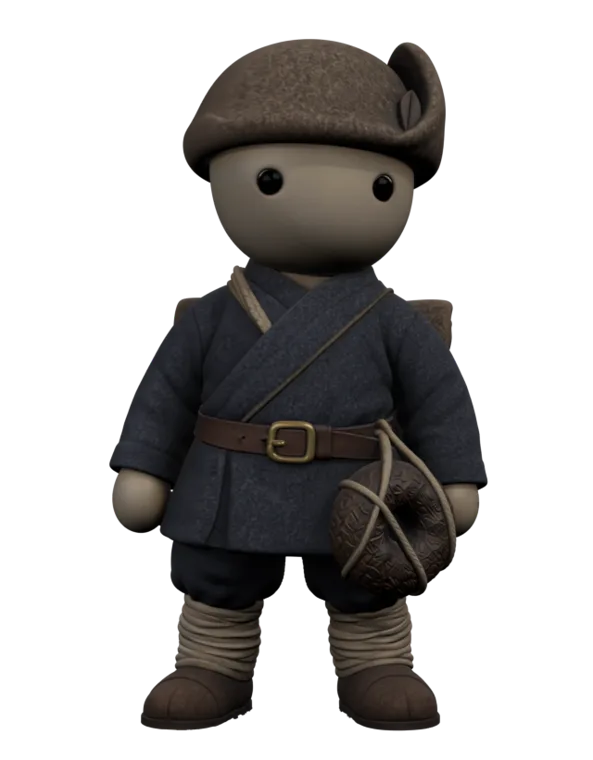
vyuk-nasi
This is Vyuk, a Naxi drover from Lijiang, who drove caravans of pressed tea into Tibet and wore a tocha knife in a hemp wrap at his belt.
awaiting colour
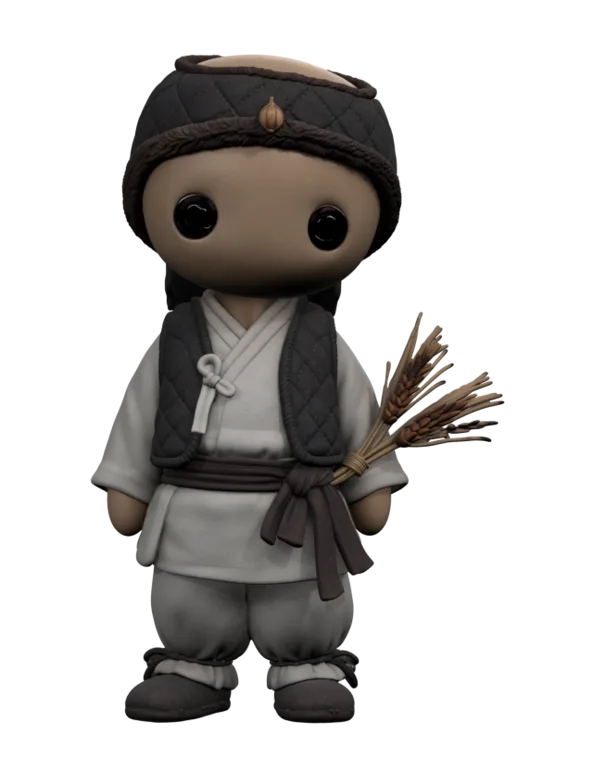
yachmenka-koreycy
This is Yachmenka, a Korean woman whose tea is not from the camellia but from barley roasted to dark amber, drunk hot after rich food and cold in the heat.
awaiting colour

yamka-daury
This is Yamka, a Daur from the relay road, who kept the postal link from the Sungari to Qiqihar, Aigun and Hulunbuir.
awaiting colour
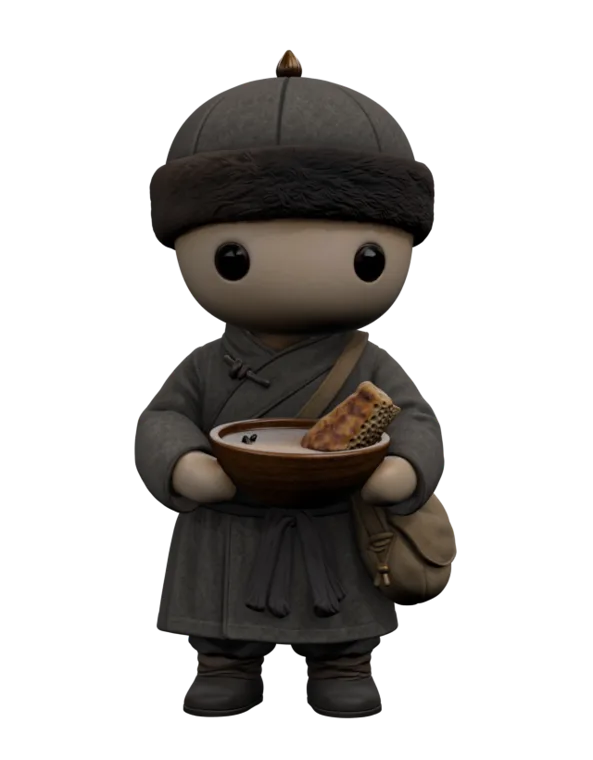
zapivka-sibo
This is Zapivka. He holds the morning ration of the Sibe garrison, when the unleavened flatbread is broken into four and dipped into milk tea, and garrison smoke rises over the camp.
awaiting colour
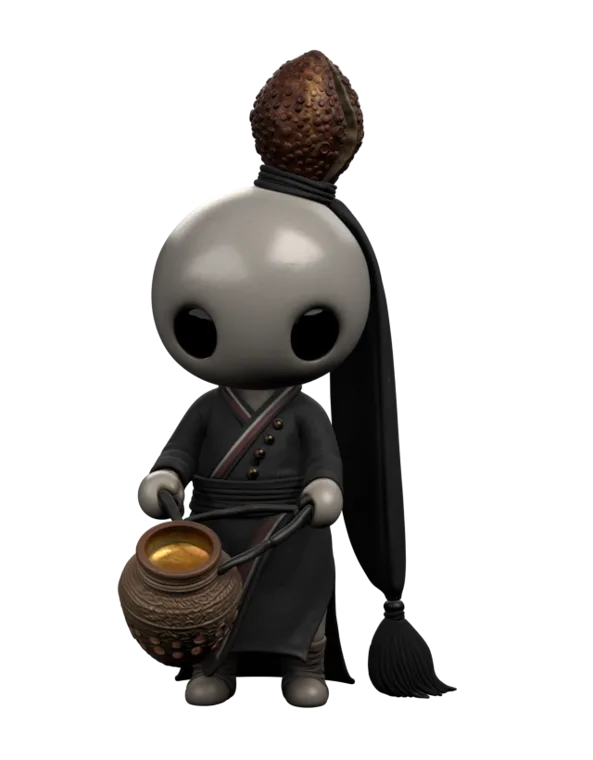
zharok-lahu
This is Zharok. He carries a heated clay jug along the slopes of Jingmai and shakes the dry leaf in it until it begins to smell roasted.
awaiting colour